
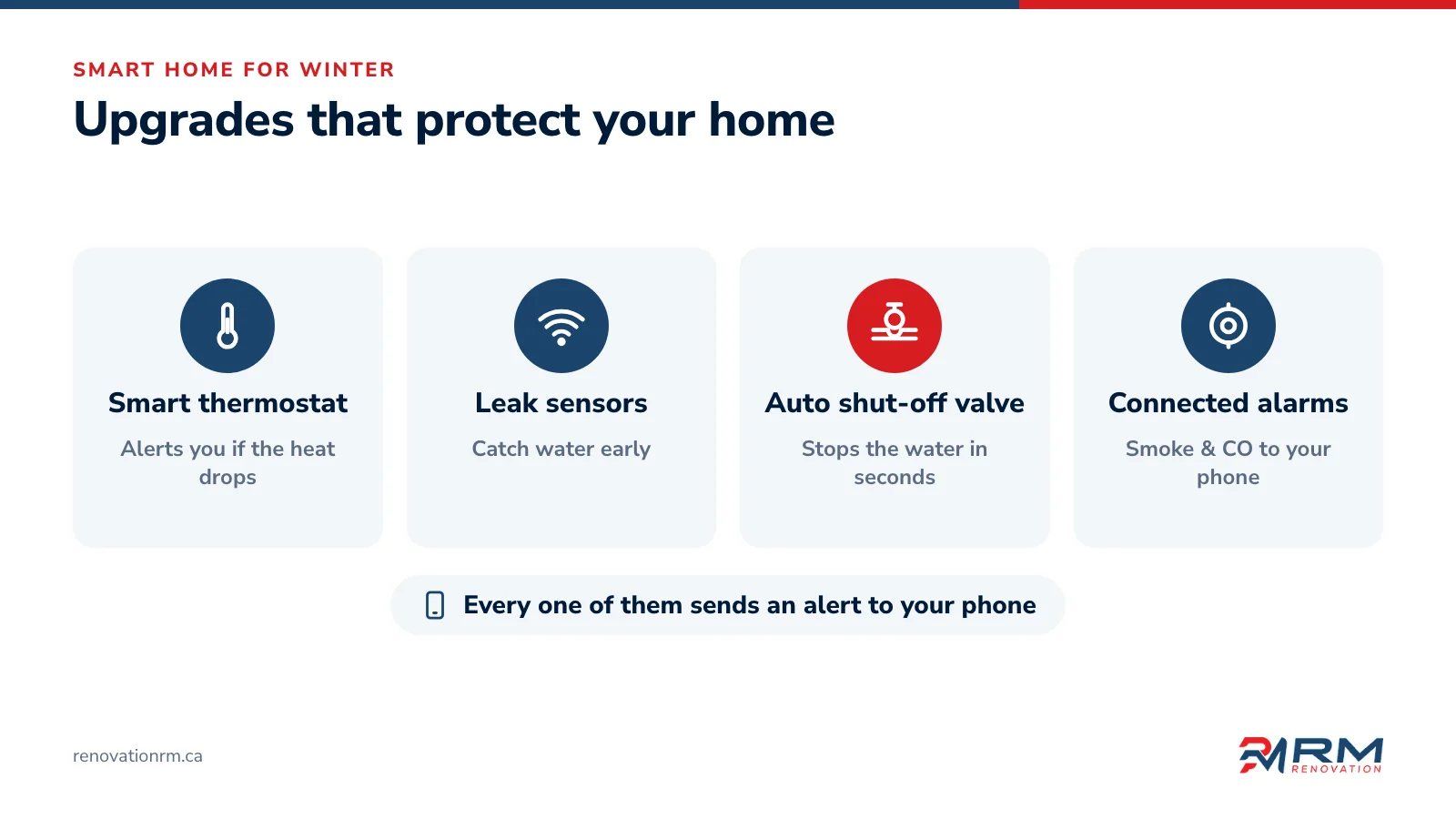
The smart home upgrades that pay off most in a Toronto winter are the ones that protect the house when nobody is watching: a smart thermostat that warns you if the heat drops, water leak sensors near pipes and appliances, an automatic water shut-off valve on the main line, and connected smoke and carbon monoxide alarms. Together they turn a burst pipe or a furnace failure into a phone alert instead of a flooded basement.
Many people think of smart home technology as speakers and lights. When I install smart systems during a renovation, I start with the devices that protect the house. Here is what I recommend, in order of value.
1. A Smart Thermostat With Temperature Alerts
A smart thermostat lets you set schedules and adjust the heat from your phone, but the real winter benefit is the alert. If the furnace fails while you are at work or away, you know within minutes, long before pipes are at risk. Some Ontario energy programs offer rebates on qualifying smart thermostats, so check the Save on Energy Home Renovation Savings page for the current offer.
2. Water Leak Sensors
Small battery sensors sit on the floor near the water heater, washing machine, sump pit, under sinks and beside the dishwasher. When they get wet, they sound an alarm and send a notification. They cost little and are the easiest upgrade on this list.
3. An Automatic Water Shut-Off Valve
This is the upgrade I recommend most for older homes. A motorized valve goes on the main water line, usually next to the meter, and closes automatically when a sensor detects a leak or the system sees unusual flow. A burst pipe then leaks for seconds instead of hours. It needs a licensed plumber to install, and the best time is during a basement or bathroom renovation when the line is easy to reach. Some insurers offer a discount for monitored leak protection, so ask yours.
4. Connected Smoke and Carbon Monoxide Alarms
Ontario's Fire Code requires smoke alarms on every storey, and since January 1, 2026, a carbon monoxide alarm on every storey and next to sleeping areas in homes with a fuel-burning appliance, fireplace or attached garage. Connected alarms meet those rules and also alert your phone, which matters most in winter when the furnace and fireplace are running.
Add Smart Upgrades During a Renovation
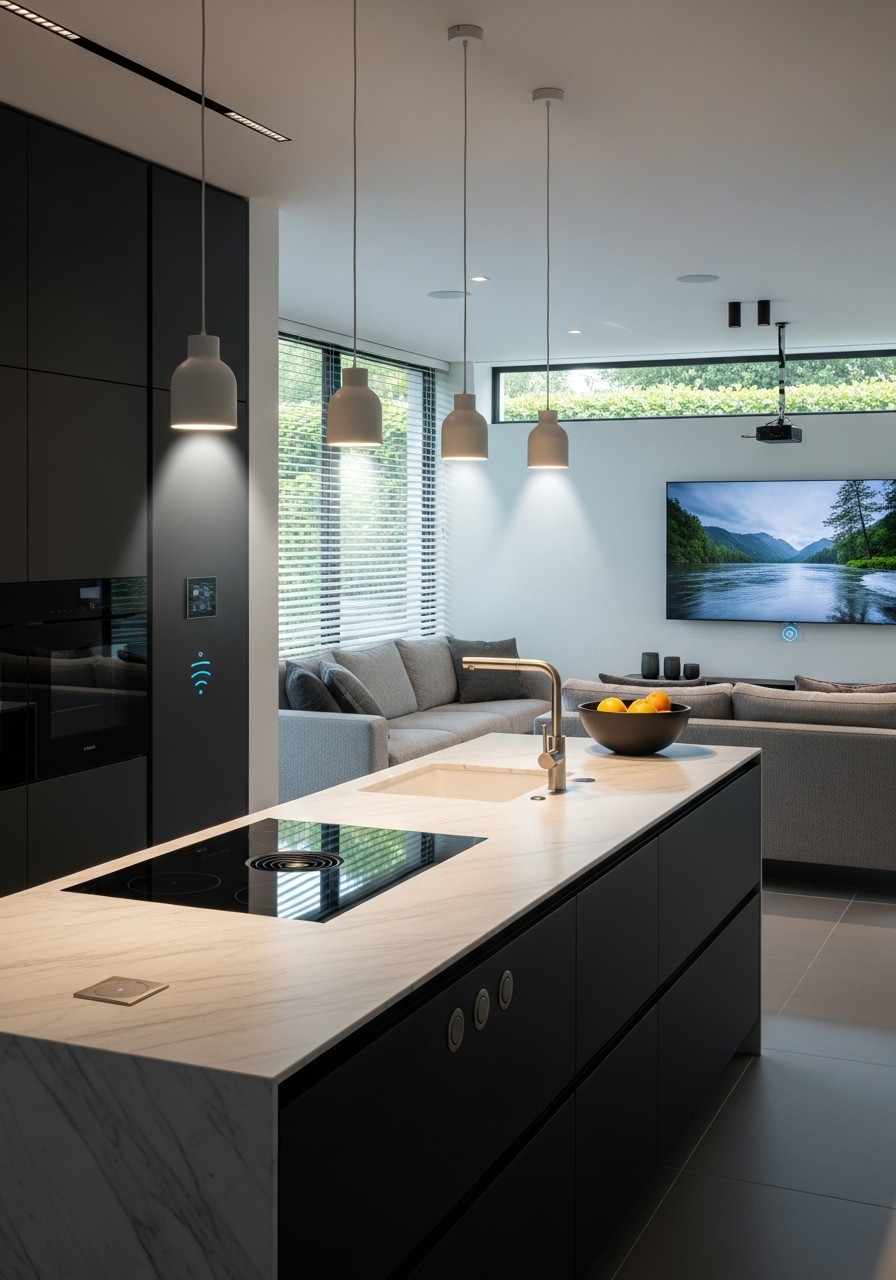
Wiring, network cabling, the shut-off valve and hardwired alarms are all simpler and tidier when walls are open. If you are planning a renovation this winter, add them to the plan now. Our smart home renovation services in Toronto cover the design and installation, and they pair well with basement renovation in Toronto. For more on protecting your pipes, see frozen pipes in Toronto homes and our winter home maintenance checklist for Toronto.
Talk to Us About a Smarter, Safer Home
We install smart home systems across Toronto, Richmond Hill, Vaughan and the GTA. Read our Google reviews for RM Renovation and book a free consultation.
Frequently Asked Questions
What is the most useful smart home device in winter?
For most homes, an automatic water shut-off valve with leak sensors, because a burst pipe is the most expensive common winter problem. A smart thermostat with alerts comes a close second.
Do smart leak detectors lower home insurance?
Some insurers offer a discount for monitored leak protection or automatic shut-off valves. Ask your insurer what they accept.
Can a smart thermostat prevent frozen pipes?
It cannot stop a freeze on its own, but it alerts you if the temperature drops or the furnace fails, so you can act before pipes freeze.
Is a smart home system hard to add to an older house?
Wireless devices work in any home. Hardwired alarms, cabling and a shut-off valve are easiest to add during a renovation.
Written by Robert Milchevich, RM Renovation.