
Key points
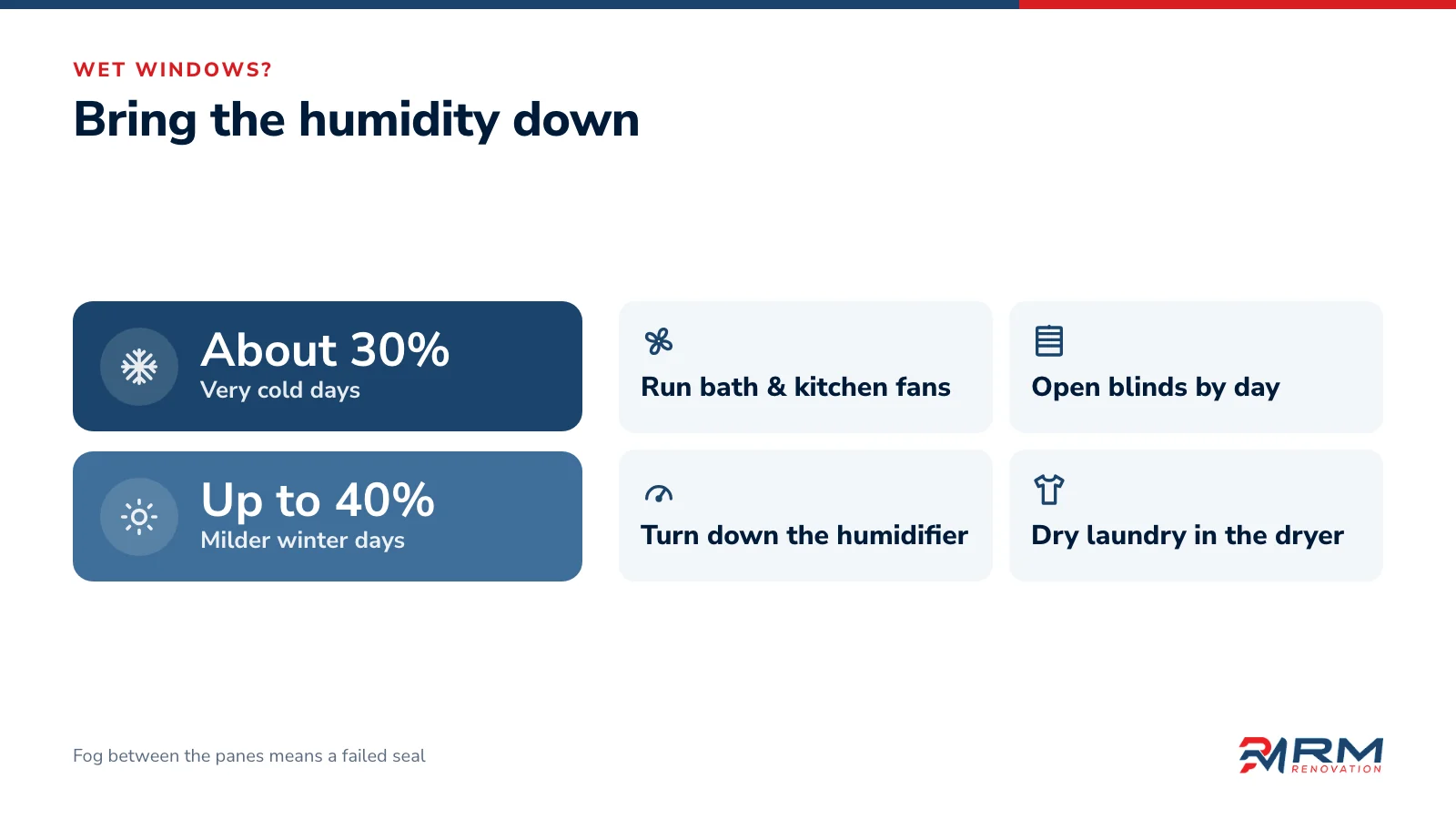
- Very cold days: about 30% humidity
- Milder winter days: up to about 40%
- Run bath and kitchen fans, open blinds
- Fog between panes means a failed seal
Condensation forms when warm, moist indoor air touches a cold surface, and in winter your windows are the coldest surface in the room. A little at the bottom corners on a very cold morning is normal. Water running down the glass every day is not, and over time it damages sills, paint and drywall and can lead to mould.
Get a Hygrometer First
A small digital hygrometer costs very little and tells you the indoor relative humidity. In very cold weather, about 30% is a good target, and up to about 40% on milder days. Most homes with constant condensation are well above that.
How to Lower Indoor Humidity
- Run the bathroom fan during every shower and for about 20 minutes after.
- Use the kitchen range hood when cooking, especially when boiling water.
- Turn down or switch off the furnace humidifier during cold snaps.
- Open blinds and curtains during the day so warm air reaches the glass.
- Dry laundry in a vented dryer, not on racks in the living space.
- Check that the dryer vent and bathroom fans actually exhaust outside.
If your bathroom fan is weak or vents into the attic, that alone can explain a lot. I explain how to size one in winter-ready bathroom renovations, and why it matters in why ventilation is important.
When the Windows Are the Problem
If fog or water forms between the two panes of glass, the seal has failed and no amount of ventilation will fix it. The glass unit or the window needs replacing. Old single-pane and aluminum windows also run much colder than modern ones, so they show condensation even at normal humidity. ENERGY STAR certified replacements may qualify for a rebate through Ontario's Home Renovation Savings program, which I cover in winter-proofing an older Toronto home.
We replace windows and fix ventilation as part of renovations across the GTA, including living room and bedroom renovations in Toronto and home renovations in Richmond Hill. Read our Google reviews and book a free consultation.
People also ask
What Temperature Should I Leave My House at When I Am Away in Winter?
I recommend leaving the thermostat no lower than about 15°C while you are away for a few days in winter. The City of Toronto says areas with water pipes should stay above 8°C, and the corners where pipes run are always colder than the thermostat. For a longer trip, ask your insurer what they require; many expect the water shut off and the lines drained if the house will be vacant.
Does Home Insurance Cover a Burst Pipe in Ontario?
Usually, yes. Most Ontario home insurance policies cover sudden water damage from a pipe that bursts in the heated part of your home, as long as you took reasonable steps to keep it heated. Damage is often excluded if the home was vacant and the water was not shut off and drained, or if the leak was slow and gradual. Always check your own policy.
How to Lower Energy Bills With Renovations (GTA Homeowner’s Guide)
Paying more on your hydro bill than you should? You’re not alone. Across Toronto and the Greater Toronto Area (GTA), homeowners are dealing with rising energy costs. But here’s the good news: you can cut your monthly utility bills without compromising comfort, and it starts with smart renovations.