
Key points
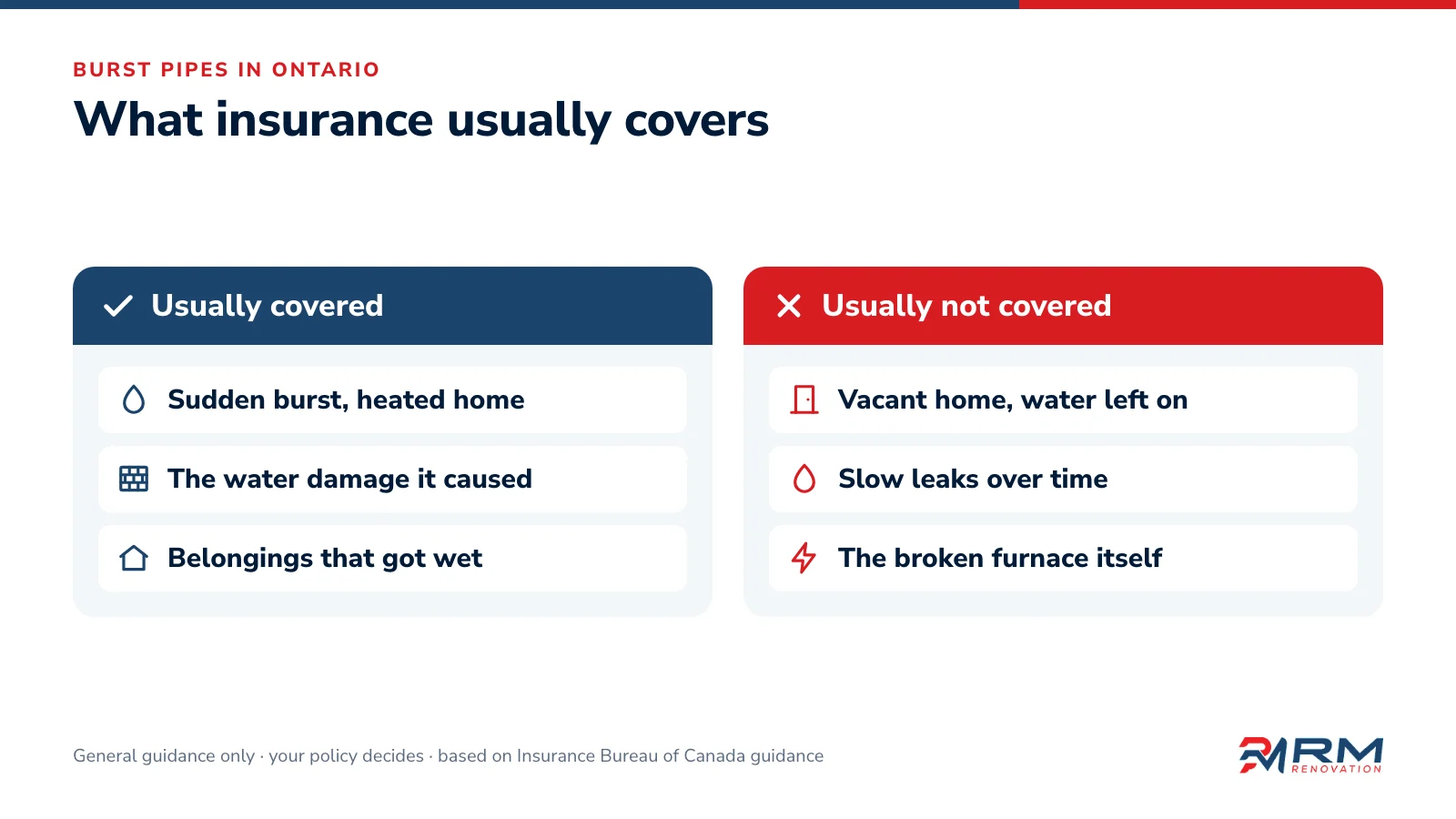
- Sudden burst in a heated home: usually covered
- Vacant home without the water shut off: usually not covered
- Slow, gradual leaks: usually not covered
- Call your insurer before a long trip

I am a renovation contractor, not an insurance broker, so the final word always comes from your policy and your insurer. But after years of rebuilding rooms after winter water damage, I can tell you what usually decides whether a claim is paid.
What Is Usually Covered
According to the Insurance Bureau of Canada, standard home policies typically cover damage from burst or frozen pipes when the pipes are in the heated part of the home and reasonable steps were taken to keep the heat on. That usually includes the water damage to walls, ceilings, floors and belongings. If the freeze happened because your furnace failed, the water damage is usually covered, but the repair or replacement of the furnace itself is not.
What Is Often Not Covered
- A vacant home. Most policies exclude frozen pipe damage when a home is vacant, even if your insurer agreed to the vacancy. IBC advises shutting off the water and draining the lines in a vacant home.
- Slow, gradual leaks. A drip that soaked a wall for months is usually treated as maintenance, not a sudden accident.
- Unheated areas. Pipes in a cold garage, crawl space or porch may not be covered if they freeze.
- Sewer backup often needs its own add-on coverage.
What I Recommend Before Winter
Call your insurer and ask three questions: what counts as vacant under your policy, what they expect you to do if you are away for more than a few days, and whether you have sewer backup coverage. Then make sure you know where your main water shut-off valve is. My guide to frozen pipes in Toronto homes explains how to prevent them, and what temperature to leave your house at when you are away covers travel.
After the Claim: Rebuilding the Room
Once the adjuster has seen the damage and the area is dried out, the rebuild begins: new insulation, drywall, flooring and finishes. Many homeowners use that moment to improve the room, and pay the difference themselves. We do this work across the city, from basement renovations in Toronto to bathroom renovations in North York. Our Google Business Profile reviews show how we work, and you can book a free consultation any time.
People also ask
How Do I Stop Condensation on My Windows in Winter?
Lower the humidity inside your home: about 30% in very cold weather and up to about 40% on milder winter days. Run bathroom and kitchen fans, turn down any humidifier, open blinds so warm air reaches the glass, and dry laundry outside the living space. If water forms between the panes, the seal has failed and the glass needs replacing.
What Temperature Should I Leave My House at When I Am Away in Winter?
I recommend leaving the thermostat no lower than about 15°C while you are away for a few days in winter. The City of Toronto says areas with water pipes should stay above 8°C, and the corners where pipes run are always colder than the thermostat. For a longer trip, ask your insurer what they require; many expect the water shut off and the lines drained if the house will be vacant.
How Much Does Basement Waterproofing Cost in 2026?
Basement waterproofing costs $70 to $180 per linear foot for interior systems, and $100 to $350 for exterior. Most homeowners pay $7,000 to $14,000 for a full project in 2026.