
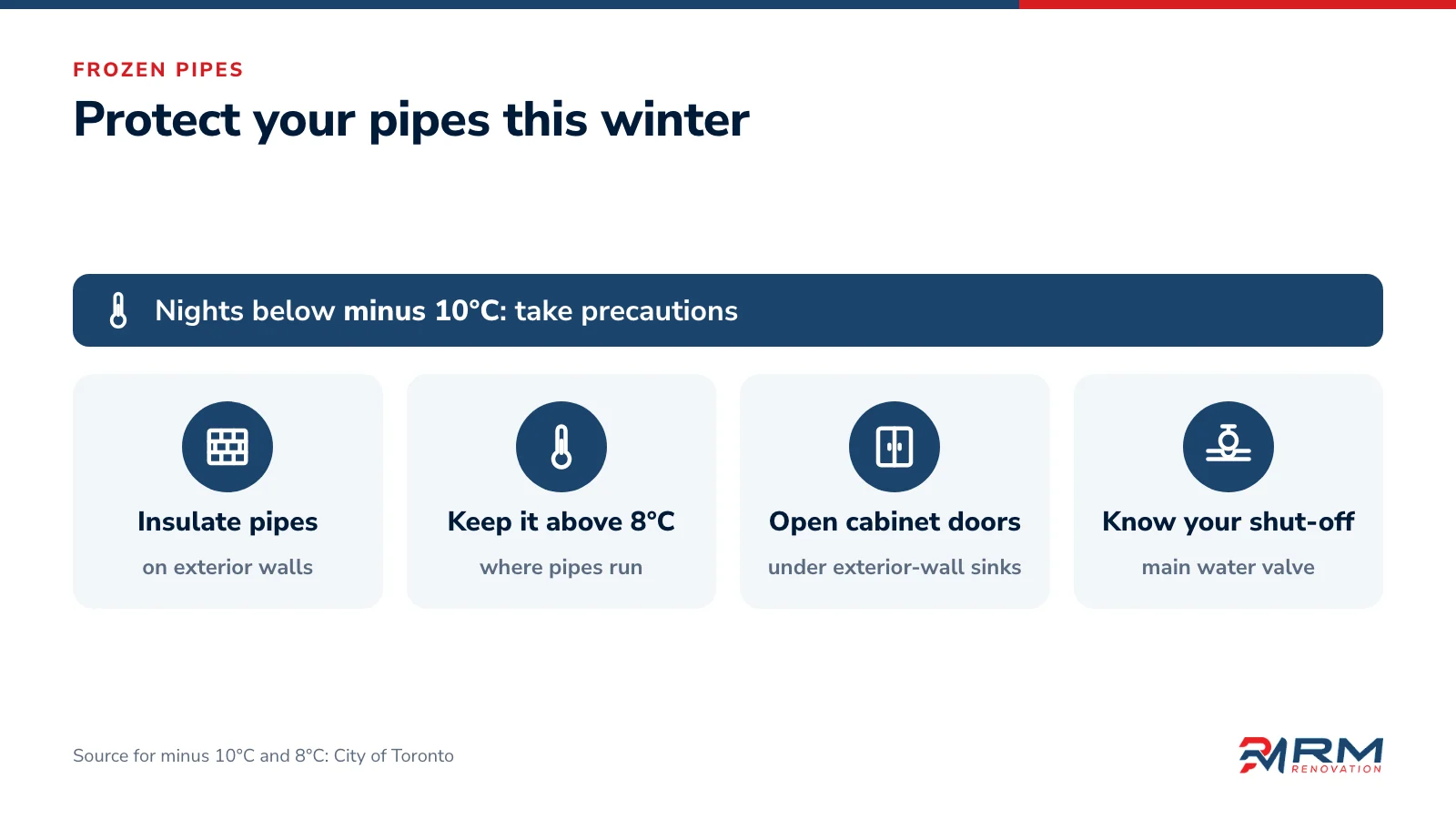
Pipes freeze where cold air reaches them: on exterior walls, in unheated crawl spaces and garages, and where the water service comes through the foundation. The City of Toronto asks residents to take precautions when nights drop below minus 10°C and to keep areas with indoor water pipes above 8°C. If a pipe does burst, shut off the main water valve first, then call for help.
Frozen pipes are one of the most common winter problems in older Toronto homes, and most of them are preventable. When my crew opens walls during a renovation, protecting pipes from the cold is one of the first things we plan for. Here is what I want every homeowner to know before January.
Where Pipes Freeze in Toronto Homes
- Exterior walls: kitchen and bathroom supply lines in outside walls, especially in older homes with little insulation
- Where the water service enters: usually at the front of the basement, near the water meter
- Unheated spaces: garages, crawl spaces, porches and additions built over open air
- Outdoor faucets: any hose bib that was not shut off and drained in the fall
Simple Things You Can Do Tonight
- Find your main water shut-off valve and make sure it turns. Show everyone in the house where it is.
- Open the cabinet doors under sinks on exterior walls during cold snaps so warm air can reach the pipes.
- Keep the basement and any room with pipes heated, especially near the water meter.
- Disconnect garden hoses and drain the outdoor faucet. I explain how in how to shut off and drain an outdoor faucet.
- If you are going away, read what temperature to leave your house at in winter before you leave.
How We Protect Pipes During a Renovation
A renovation is the best chance you will get to fix a pipe that freezes every winter. When we open walls, we move supply lines out of exterior walls where we can. Where they have to stay, we keep the pipes on the warm side of the insulation, seal air leaks around them, and add pipe insulation in cold spots. In basements, we insulate the rim joists, the area where the floor framing sits on the foundation, because cold air there is a common cause of frozen lines. Our work in historic home renovation in Toronto deals with this all the time, and our guide to winter-proofing an older Toronto home goes further.
If a Pipe Freezes
If you turn on a tap and nothing comes out, the pipe may be frozen. The City of Toronto recommends opening a cold water tap in the basement, ideally in the laundry room, so water can flow as the ice melts, and gently warming the suspected section, for example with a warm towel. Thawing can take one to six hours. Never use a torch or open flame. If the water is still not running, call 311 so the City can check its side of the service.
If a Pipe Bursts: The First Ten Minutes
- Shut off the main water valve. This stops the damage from getting worse.
- Turn off power to wet areas if water is near outlets or the electrical panel, and only if you can reach the panel safely.
- Take photos and video of the damage before you clean up. Your insurer will want them.
- Call your insurer and a contractor. Wet drywall, insulation and flooring need to come out quickly to prevent mould.
Whether your insurance pays depends on how the damage happened. I cover that in does home insurance cover a burst pipe in Ontario. Once the area is dry, we rebuild: new drywall, insulation, flooring and finishes, often with the pipe moved to a warmer spot so it does not happen again. See our basement renovation services in Toronto for what that looks like.
Talk to RM Renovation
If your pipes freeze every winter, or you are planning a renovation and want to fix it for good, we can help across Toronto and the GTA. Read our reviews on Google for RM Renovation in Etobicoke and book a free consultation.
Frequently Asked Questions
At what temperature do pipes freeze in Toronto?
Water freezes at 0°C, but pipes usually freeze when cold outdoor air reaches them in a poorly insulated spot. The City of Toronto urges precautions when nights drop below minus 10°C.
Should I drip my taps to stop pipes freezing?
A slow drip from a tap on an exterior wall can help on the coldest nights by keeping water moving. It is a short-term measure; insulating or moving the pipe is the real fix.
Can I thaw a frozen pipe myself?
Yes, gently. Open a cold tap and warm the pipe with a warm towel or hair dryer, never an open flame. If it stays frozen, call a plumber or 311 in Toronto.
How do I stop a pipe from freezing again?
Move it out of the exterior wall or keep it on the warm side of the insulation, and seal the air leaks around it. A renovation is the easiest time to do this.
Written by Robert Milchevich, RM Renovation.