
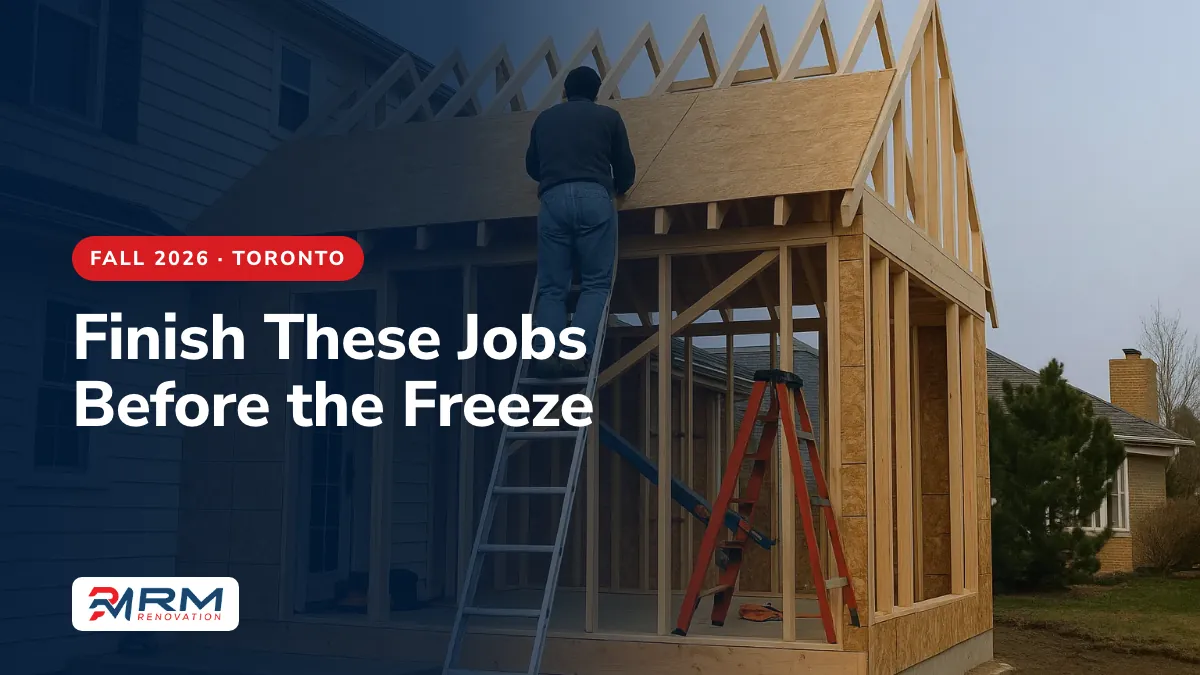
Finish anything that needs dry ground, mild temperatures or an open roof before late fall: exterior painting and caulking, concrete and masonry, roof and flashing repairs, grading and downspouts, and closing in any addition. Kitchens, bathrooms, basements and flooring are indoor work, so they can carry on right through a Toronto winter.
Toronto usually sees its first fall frost somewhere between mid-October and early November, and the ground starts freezing not long after. Once that happens, outdoor work gets slower, costlier or simply has to wait for spring. This checklist shows what to book now and what can safely wait.
Why Temperature Decides What You Can Build in the Fall
Most exterior materials have a minimum working temperature, and it applies to the air and the surface, day and night, until the product cures. That is why a sunny 12°C afternoon in late October can still be the wrong day to paint siding if it drops near freezing overnight.
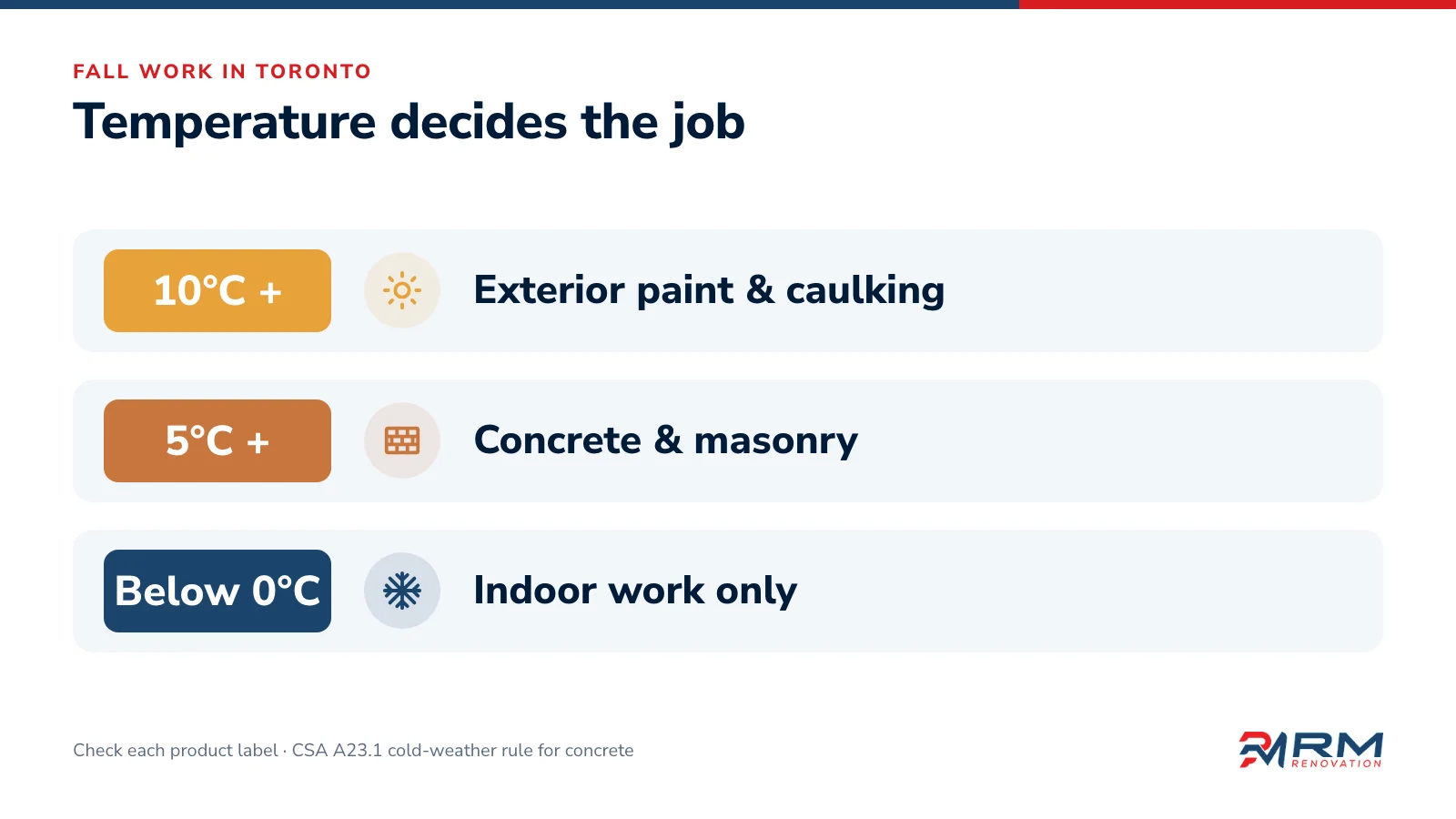
As a rule of thumb, most exterior paints and many caulks want at least 10°C while they go on and dry, although some low-temperature formulas are rated down to about 2°C. Concrete and mortar need cold-weather protection once air temperatures reach 5°C or below, which is what CSA A23.1, the Canadian concrete standard, calls for. Below freezing, the ground itself becomes the problem for footings, grading and landscaping.
1. Close In Any Addition or Exterior Opening
If you are building an addition, a dormer or a new door opening, the most important fall milestone is getting it closed in: roof sheathing and shingles on, windows and doors installed, and the walls wrapped. After that, crews can work inside through the winter with temporary heat.
Foundations are the part to start earliest. Footings cannot be poured on frozen ground, and winter excavation means extra cost for heating and protecting the concrete. If your home addition in Toronto has not broken ground by October, plan the foundation for spring and use the winter for design and permits. Our guide to how long a home addition takes walks through each stage, and home addition costs covers the budget side.
2. Pour Concrete and Repair Masonry While It Is Still Mild
Front steps, walkways, foundation patches and brick repointing all rely on concrete or mortar curing properly. Done too late in the season, they need blankets, heaters and extra time, and a hard frost during curing can weaken the surface for good. Book these jobs for September or early October.
3. Paint and Caulk the Exterior
Peeling trim, gaps around windows and cracked caulking let water in, and water that freezes in those gaps makes them bigger each winter. Fall is the last chance to scrape, prime, caulk and paint while temperatures hold. Indoors is different: interior painting works all year, and our painting and decorating team often moves inside once the weather turns. The interior painting cost guide has current GTA prices.
4. Fix Grading and Downspouts Before the Snow
Snowmelt and spring rain are when Toronto basements leak. Make sure the soil slopes away from the foundation, downspouts discharge well away from the house, and window wells are clear. If you have seen damp walls or a musty smell, have the foundation checked now, while you can still dig. Our answer on basement waterproofing costs explains the options, and the City of Toronto's basement flooding subsidy requires downspouts to be disconnected from the sewer before it pays out.
5. Get Roof, Flashing and Gutters Ready
Shingles seal best in mild weather, and a roof leak found in January is much harder to fix than one found in October. Have flashing around chimneys and skylights checked, clear the gutters once the leaves are down, and fix any sagging sections before they fill with ice.
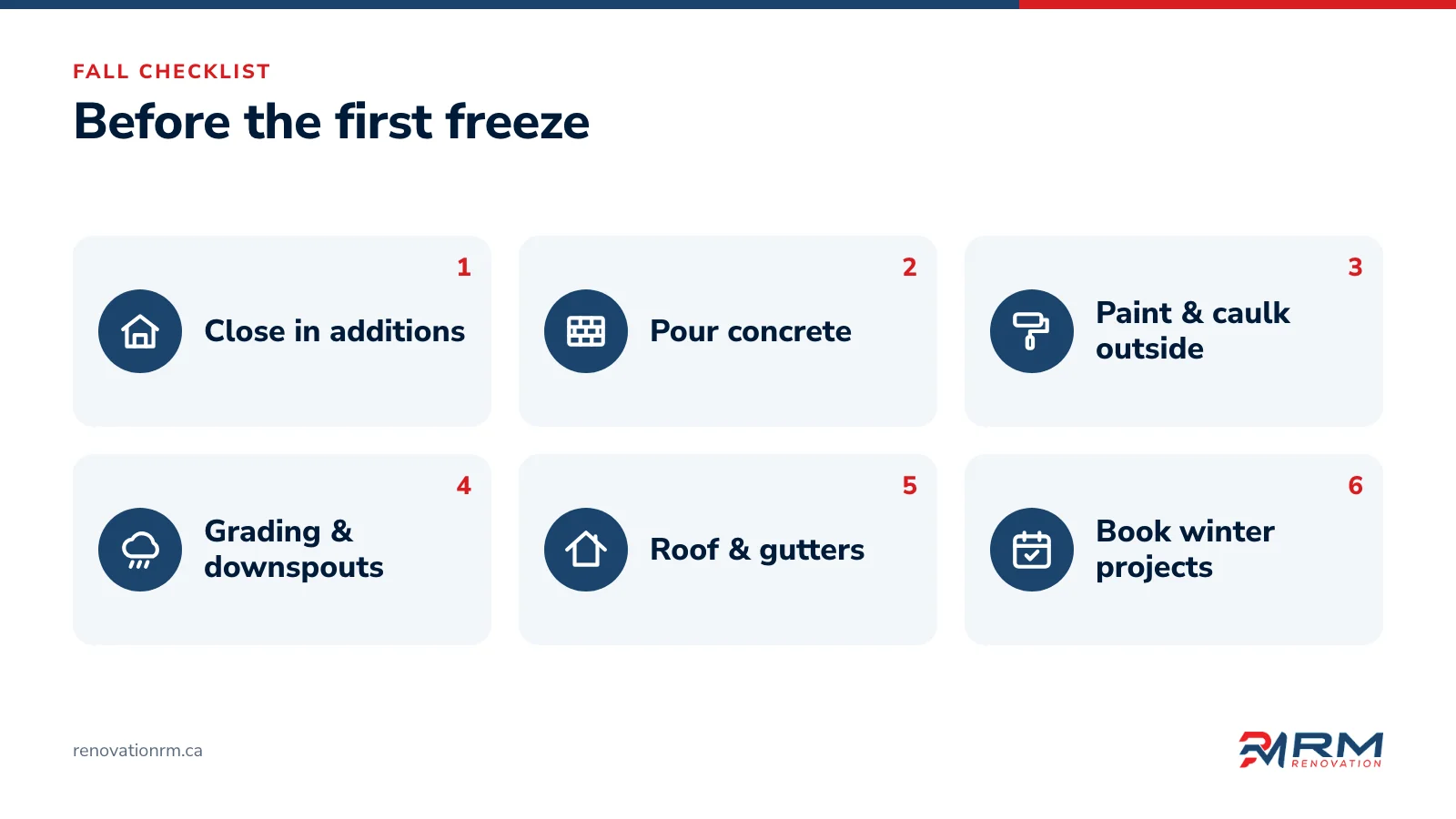
6. Book Your Winter Interior Project Now
Winter is a good season for indoor renovations, and the homeowners who plan in the fall get the first spots. Kitchens, bathrooms, basements, flooring and condo renovations all carry on regardless of the weather. October is the time to finalise the design, order cabinets and tile with long lead times, and apply for any permits so work can start in November or December.
We cover the indoor options in detail in renovating in winter in Toronto, and if a basement is on your list, read why fall is the best time to start a basement renovation.
What Can Safely Wait Until Spring?
Landscaping, decks, new driveways, siding replacement and major excavation are all better left for spring if they are not already under way. Starting them late means paying for winter protection, and the finished work is often better when it is done in the right season.
Plan Your Fall and Winter Work With RM Renovation
The best fall plan splits the year in two: finish the exterior before the freeze, then move inside for the winter. RM Renovation handles both, from whole-home renovations in Toronto to single rooms, with permits and scheduling taken care of. You can read what Toronto homeowners say about our work in our Google reviews, then book a free consultation to plan your season.
Frequently Asked Questions
What is the latest you can paint a house exterior in Toronto?
Most exterior paints need about 10°C or warmer while they go on and dry, so that usually means early to mid-October. Low-temperature paints extend the season slightly, but check the label.
Can concrete be poured in November in Toronto?
It can, but once temperatures reach 5°C or below it needs cold-weather protection such as heated enclosures or insulated blankets, which adds cost. Pour before the cold sets in when you can.
Can you build a home addition in winter?
Yes, once it is closed in. The foundation is the hard part, because footings cannot go on frozen ground. Many additions are designed and permitted over the winter and started in spring.
Which renovations are best done in winter?
Indoor projects: kitchens, bathrooms, basements, flooring, interior painting and condo renovations. They are not affected by the weather and contractors often have more availability.
Written by Robert Milchevich, RM Renovation.