

A winter-ready bathroom has three things: a warm floor, a fan that clears steam quickly, and walls and plumbing that stay dry and protected from the cold. If you are renovating a bathroom this fall, an electric heated floor, a properly sized exhaust fan vented outside and a waterproofed shower will make the biggest difference through a Toronto winter.
Winter is hard on bathrooms. Cold tile, steam with nowhere to go and condensation on windows all lead to discomfort and, over time, mould. Here is what to plan for.
Heated Floors: The Upgrade Homeowners Notice Most
Electric radiant floor heating is a thin heating mat or cable set into the tile adhesive under the floor. It is controlled by its own thermostat, often with a schedule so the floor is warm when you wake up. Because it goes in under the tile, it only makes sense to add during a renovation.
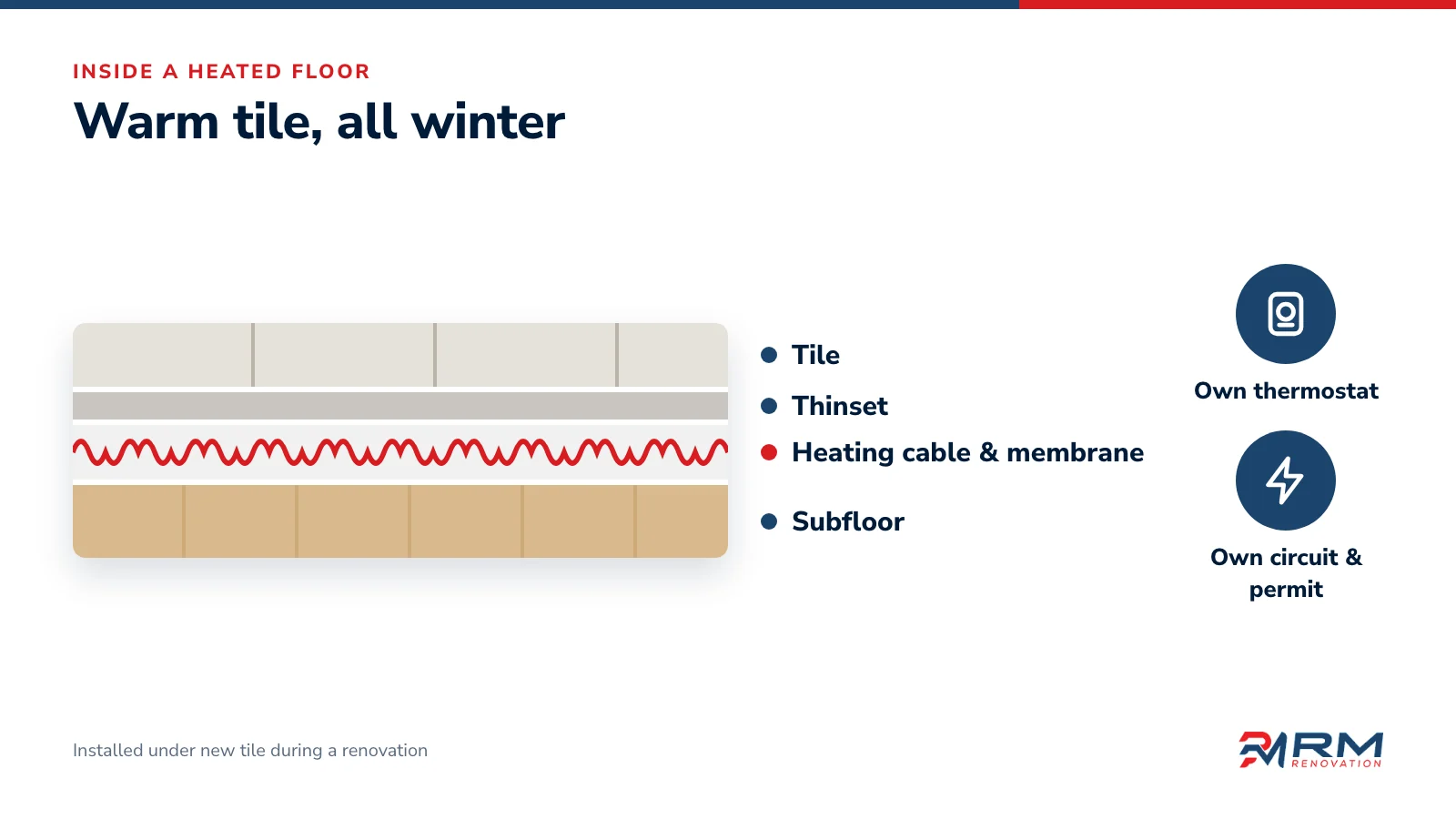
The heating needs its own circuit, which a licensed electrician installs and which needs an electrical permit. Placing a floor temperature sensor and testing the cable before and after tiling are both part of a careful install. Heated floors pair especially well with porcelain and natural stone, which hold warmth. Our flooring and tiling team in Toronto installs both.
Size the Exhaust Fan for the Room
The most common bathroom problem in winter is moisture. Windows stay closed, the air outside is cold, and steam from a hot shower condenses on mirrors, windows and cold walls. A good exhaust fan prevents this, but only if it is large enough and vented to the outdoors.
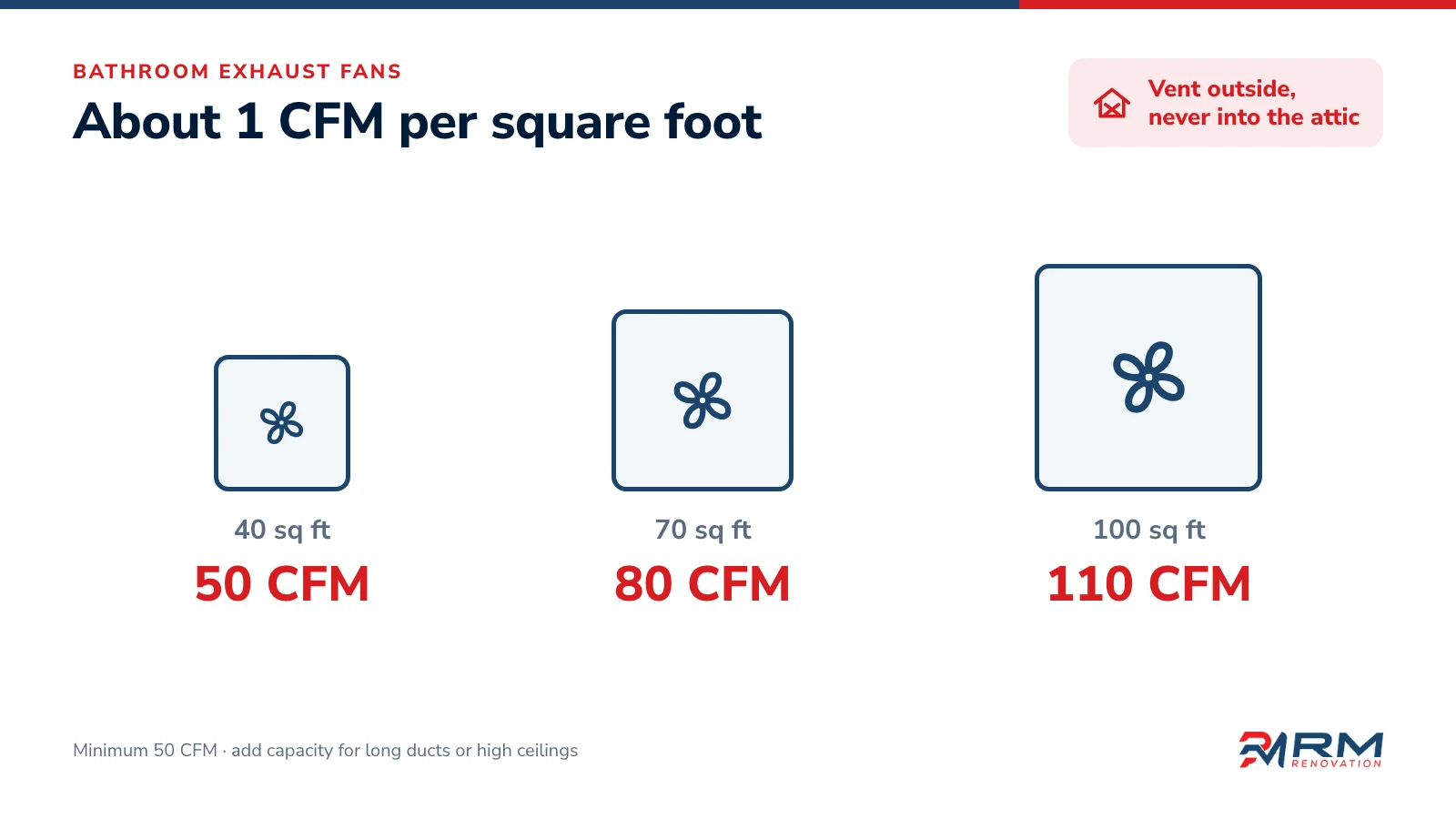
The usual rule is about 1 CFM of airflow per square foot of floor, with a minimum of 50 CFM. A larger bathroom, high ceilings or a long duct run call for more. Choose a quiet model so it actually gets used, and consider a humidity sensor or timer that keeps it running for about 20 minutes after a shower. Most important of all, the duct must end outside, never in the attic, where warm, wet air causes frost and mould. We explain why in why ventilation is important in a renovation.
Waterproof the Shower and Use Moisture-Resistant Materials
Tile and grout are not waterproof on their own. A modern shower needs a waterproofing membrane behind the tile, sealed at every corner, niche and valve. Moisture-resistant backer board, a properly sloped shower floor and a good-quality caulk at changes of plane keep water where it belongs. Done right, this is what stops mould from starting in the first place.
Protect Pipes on Exterior Walls
Older Toronto homes often have bathrooms on outside walls, sometimes with little or no insulation. Water lines in those walls can freeze on the coldest nights. A renovation is the right time to move supply lines to interior walls where possible, or to insulate the wall and keep pipes on the warm side of the insulation. Shut-off valves for each fixture make future repairs easier too.
Small Comforts That Make Winter Easier
- A heated towel rail on its own switch or timer
- A window with good weatherstripping, or a new energy-efficient unit
- Warm, layered lighting with a dimmer for dark winter mornings
- A rain shower or thermostatic valve that holds the water temperature steady
What Does a Bathroom Renovation Cost and How Long Does It Take?
As our bathroom renovation cost guide shows, most full bathroom renovations in Toronto cost $12,000 to $30,000, and larger projects with custom finishes or layout changes can pass $50,000. A full renovation with plumbing and tile usually takes 3 to 6 weeks. A heated floor and an upgraded fan add relatively little to the total when they are part of the plan from the start.
For more planning help, see our bathroom renovation checklist and our small bathroom renovation ideas. If you are thinking about the whole house before the cold arrives, our fall renovation checklist covers the jobs to finish first.
Plan Your Winter-Ready Bathroom With RM Renovation
RM Renovation builds bathrooms that are comfortable in January, not just good-looking in photos. Explore our bathroom renovation services in Toronto, see what clients say in our Google reviews, and book a free consultation to start your project this fall.
Frequently Asked Questions
Is a heated bathroom floor worth it?
For most Toronto homes, yes. It makes tile comfortable all winter, helps the floor dry faster and adds little to the cost of a renovation when it is installed under new tile.
What size exhaust fan does my bathroom need?
About 1 CFM per square foot of floor, with at least 50 CFM. A 70 square foot bathroom needs roughly 80 CFM. Add capacity for long duct runs or high ceilings.
Why does my bathroom get mould in winter?
Warm, wet air condenses on cold surfaces when the windows are closed. A fan that is too small, vented into the attic or switched off too soon is the usual cause.
Can I renovate a bathroom in winter?
Yes. Bathroom renovations happen indoors, so winter does not affect the work. Most full renovations take 3 to 6 weeks.
Written by Robert Milchevich, RM Renovation.