
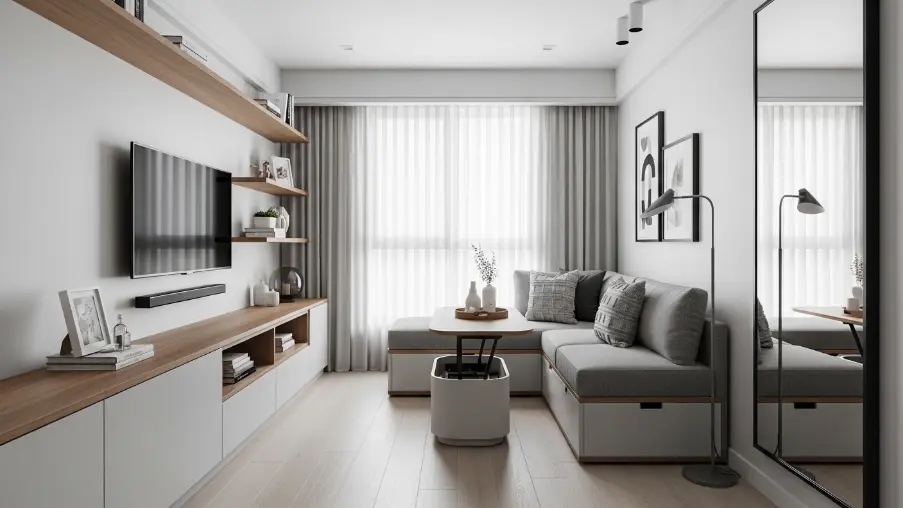
Small condo renovation ideas are all about making limited space feel bigger, brighter, and more functional. The biggest wins usually come from opening up tight layouts, adding smart storage that uses vertical space, and improving lighting so the unit feels more spacious without changing its footprint.
In cities like the GTA, condos are getting smaller while prices per square foot keep rising. That pushes many owners to rethink moving and instead upgrade what they already have. A thoughtful renovation can turn a cramped, outdated unit into a clean, efficient living space that feels modern and works better every day. It can also improve resale value when done strategically.
This guide breaks down practical renovation ideas that actually make a difference in small condos, not just cosmetic changes that look good on paper.
Why Small Condo Renovations Matter
A condo renovation is rarely about looks alone. In a compact unit, every decision affects how the space functions day to day. Here is why the right remodel matters more than ever for local owners.
Space is limited and valuable
The average condo in Ontario is now about 35% smaller than it was 25 years ago. A smart layout reclaims square footage that currently goes to waste.
Renovating beats moving on cost
Land transfer tax, agent commissions, and moving fees stack up quickly. Reinvesting that money into your unit usually delivers more value than buying bigger.
Resale value rides on it
Buyers across the GTA want move-in-ready condos. A dated kitchen or bathroom is the most common reason offers come in below asking.
Daily comfort improves right away
Better flow and storage cut clutter and stress. You notice the change the moment the project wraps.
Lower bills follow modern upgrades
Efficient lighting, fixtures, and appliances trim monthly utility costs. In a high-carrying-cost market, those savings add up.
Your life has outgrown the layout
Remote work, a growing family, or planning to age in place all call for a smarter floor plan that fits how you live now.
Small Condo Renovation Ideas That Make the Biggest Impact
The ideas below tackle the exact problems small condo owners face most: tight layouts, no storage, and poor light. Each one explains what to do and how to do it right.
1. Open Up the Floor Plan
Closed-off, choppy layouts make a small condo feel like a series of boxes. Opening the floor plan is the single most effective way to gain a sense of space. That said, a condo has rules a detached home does not.
Many interior walls hide plumbing stacks, ductwork, or structural elements that cannot be touched. So the first step is confirming which walls are non-load-bearing, which usually calls for an engineer’s review. Once that is clear, a few moves transform the flow: remove a partition between the kitchen and living room, cut a pass-through opening, widen a doorway, or swap a swing door for a space-saving pocket door.
Each option pulls more daylight through the unit. For layouts that need real reconfiguration, a whole-home renovation handles the engineering, permits, and board approvals the right way.
Read More: Second Story Addition Cost in Toronto & GTA: 2026 Complete Guide
2. Upgrade the Kitchen Without Expanding It
Galley kitchens dominate GTA condos, and they often feel boxed in. The answer is not more square footage. It is smarter design inside the footprint you already have.
Start with light, low-contrast finishes, since they keep a tight kitchen open and bright. From there, a handful of targeted moves do the heavy lifting:
- White or light-stained shaker cabinets with quartz counters, the proven local favourite for a bright, open look.
- A counter-depth fridge in place of a deep model, which clears the walkway.
- A glossy or mirrored backsplash that bounces light around the room.
- Ceiling-height cabinetry to capture the storage most kitchens waste up top.
- Drawers instead of lower doors, since they pull out for far easier access.
A well-planned kitchen renovation on these principles also returns the most at resale, so the budget works twice.
3. Maximize Storage in Every Room
Storage is the top frustration for nearly every small condo owner. The mindset shift that solves it is simple: stop storing air, and start storing upward.
Most cabinets and closets waste half their height, so the fix is to claim the space already sitting unused. This quick guide shows where to look and what to add:
| Wasted Space | Storage Fix |
| Empty height inside cabinets | Shelf risers and stackable inserts |
| Deep, hard-to-reach base cabinets | Pull-out organizers and drawers |
| Bare wall above the sofa or desk | Floating shelves or floor-to-ceiling millwork |
| Dead space under the bed | Low-profile drawers or rolling bins |
| Narrow hallway or entryway | Slim built-in cabinetry or a bench with cubbies |
One caution from experience: dual-purpose furniture only earns its place if it is easy to use every day, so skip anything that hides storage behind a daily hassle. Built-in cabinetry from a living and bedroom renovation keeps clutter out of sight without crowding the floor.
4. Make Small Bathrooms Feel Larger
A tight condo bathroom often runs just 40 to 55 square feet, yet you can transform it without moving a single pipe. Targeted, mid-range upgrades do the heavy lifting here.
Begin with a wall-mounted or floating vanity, because exposing floor underneath visually expands the room. Then hang a large or backlit LED mirror to widen the sightline and add task light. For tile, choose a light, large-format option that cuts down on grout lines and reads as one clean surface.
Finish with layered lighting and a glass shower panel instead of a curtain to keep the view open. A professional bathroom renovation also installs the waterproofing membrane most GTA buildings require, so the work clears board review on the first submission.
Read More: Garage Conversion Cost in Toronto: The Complete 2025-2026 Guide
5. Create a Multi-Functional Living Space
Remote work reshaped how locals use their condos. One room now has to serve two or three jobs at once. The current approach builds flexible zones instead of single-purpose rooms.
Picture a home office that folds away into a guest room, or a dining area that converts into a workspace by day. To define each zone without walls, use built-in millwork, a low shelving unit, or a change in flooring or paint.
Add modular and wall-mounted furniture that reconfigures as the day shifts. Designed well as part of a whole-home renovation, these zones let every square foot pull double duty.
6. Improve Lighting Throughout the Condo
Weak, single-source lighting makes any condo read smaller and flatter. Layered lighting fixes that fast, and it ranks among the most affordable upgrades available.
Build the plan in three layers, and each one does a distinct job:
- Ambient: recessed pot lights deliver even, overall light without lowering the ceiling line.
- Task: under-cabinet LED strips brighten kitchen counters exactly where you work.
- Accent: a statement pendant over a table or island adds warmth and draws the eye upward.
Finally, choose warm-white bulbs around 2700K to 3000K for an inviting tone, and put key zones on dimmers for control. Paired with new flooring and tiling, fresh lighting completely resets how a dated unit feels.
7. Use Mirrors to Create the Illusion of Space
Mirrors are the most affordable space-expanding tool in any small condo. Positioned with intent, a mirror visually doubles a room.
The rule is placement. Hang a large mirror on the wall opposite a window so it pushes daylight deep into the unit and brightens dark corners. Full-height mirrors stretch a room vertically and make ceilings read taller.
A mirrored backsplash or a mirrored closet door delivers the same effect in kitchens and bedrooms. Often a single well-placed mirror outperforms a far more expensive structural change.
8. Upgrade Flooring for a Larger Look
Old, mismatched flooring chops a small condo into disconnected sections. Running one continuous floor throughout ties the unit together and makes it read as a single, larger space. Condo flooring, however, comes with strict local rules you must address first.
The National Building Code sets a minimum Sound Transmission Class of 52 for condos, and most boards add their own floor-covering standards on top. Newer high-rise buildings frequently demand even higher ratings.
As a result, the flooring and its acoustic underlayment have to be approved together as one tested system, not bought separately. For the larger look, run the planks in the same direction across every room and minimize transition strips.
Read More: Garden Suite Cost: The Complete 2026 Budget Guide
9. Refresh Walls and Paint Colours
Never overlook paint. It remains the lowest-cost, highest-impact change in any small condo renovation.
Light, reflective tones make tight walls recede, so lean on soft whites, warm beiges, and cool greys for the main rooms. For 2026, deeper, confident shades like teal and forest green are taking over from grey as the popular accent neutral.
To make a pocket bathroom or closet read larger, paint the walls and ceiling the same light tone so the eye finds no hard stopping point. A clean repaint through a painting and decorating service modernizes the whole unit in a single weekend.
10. Add Custom Built-Ins
Built-ins are the secret weapon of small-space design. They solve storage and define zones in one move, with zero wasted inches.
Custom millwork fits the awkward columns, angled walls, and shallow recesses that store-bought furniture never quite suits. Common high-value pieces include a built-in media wall, a window banquette with hidden storage beneath the seat, and a slim entryway bench with hooks and cubbies.
Because each piece is built to exact dimensions, it looks deliberate and adds genuine resale value. For owners renting out their unit, a durable, space-smart build also fits a rental property renovation that attracts better tenants.
Small Condo Renovation Mistakes to Avoid
A handful of common missteps cost local owners time, money, and approvals. Steer clear of these, and your project runs far smoother.
- Skipping condo board approval, which can bring fines or a stop-work order.
- Selecting flooring before confirming the building’s STC and IIC sound requirements.
- Attempting to move plumbing stacks or alter shared structural walls.
- Over-renovating past what the building’s resale market will pay back.
- Setting a budget with no buffer for surprises behind the walls.
- Hiring the cheapest quote instead of a contractor with condo experience.
- Forgetting to book the freight elevator and confirm permitted work hours.
- Chasing finishes while ignoring storage and lighting fundamentals.
How Much Does a Small Condo Renovation Cost?
A small condo renovation in Toronto generally runs $100 to $300 per square foot in 2026. A single-room refresh starts near $18,000, while a full-unit overhaul reaches $70,000 or more.
| Renovation Tier | Typical Cost (GTA, 2026) |
| Cosmetic refresh (single area) | $18,000 – $25,000 |
| Mid-range kitchen | $35,000 – $60,000 |
| Mid-range bathroom | $25,000 – $40,000 |
| High-end / luxury kitchen | $60,000 – $80,000+ |
| Full unit renovation | $70,000 – $120,000+ |
Factors That Affect Renovation Pricing
Scope, finish tier, and unit size set the base price. After that, condo-specific costs push the total higher than a freehold home. Plumbing and electrical work, board fees, permits, freight elevator booking, and restricted work hours all add to the final number.
Small Condo Renovation Trends for 2026
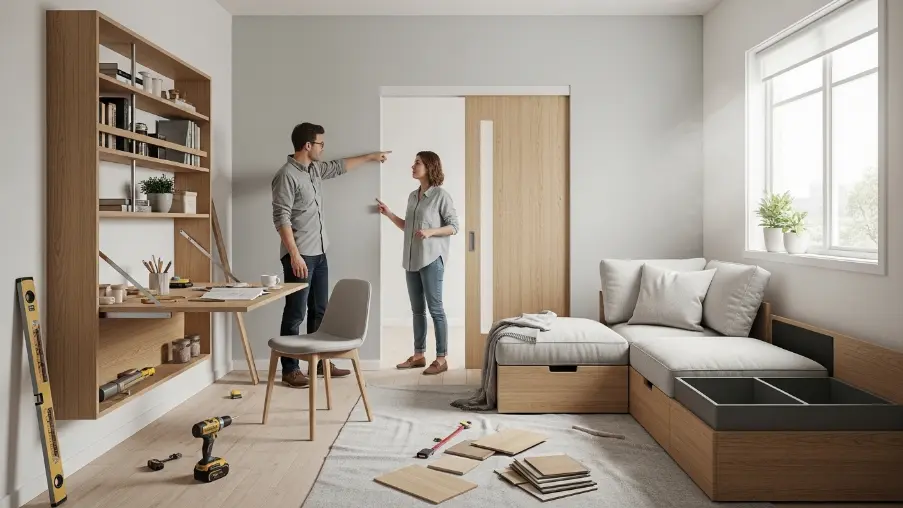
These design directions are shaping local condo remodels this year. Each one balances style with the practical demands of compact living.
- Flexible, multi-functional rooms built around remote work and overnight guests.
- Energy-efficient fixtures and appliances that lower monthly bills.
- Biophilic design that brings in natural materials, plants, and calming tones.
- Warmer, confident paint colours like teal and forest green replacing cool grey.
- Floor-to-ceiling custom millwork for hidden storage and clean sightlines.
- Smart-home features such as touchless faucets and app-controlled lighting.
- Counter-depth, integrated appliances for a seamless built-in kitchen look.
- Spa-inspired bathrooms with large-format tile, glass panels, and LED mirrors.
Read More: Home Addition Prices: What to Budget in 2026
Conclusion
The right small condo renovation ideas turn tight square footage into open, functional, and more valuable space. Direct your budget first to layout, storage, lighting, and the kitchen and bathroom, since those drive both comfort and resale. Above all, confirm your board’s rules before any work starts.
Ready to plan a renovation that respects condo rules, your timeline, and your budget? Contact Renovation RM for a free consultation, and turn your GTA condo into a space that works as hard as you do.
Frequently Asked Questions
Is renovating a small condo worth it?
Yes, when planned well. Kitchen and bathroom upgrades return strong resale value while improving daily living in a compact unit.
Do I need a permit to renovate a condo in Toronto?
Board approval applies to most work. City permits apply to plumbing, electrical, HVAC, or structural changes, not cosmetic updates.
What should I prioritize with a $50,000 condo renovation budget?
Put it toward the kitchen, bathroom, flooring, and lighting. Those four deliver the biggest visual impact and the best return.
How long does a small condo renovation take?
Most run 2 to 6 months in total. Board approval and material ordering add time beyond the 4 to 8 weeks of on-site work.
Can you remove a wall in a condo to open the floor plan?
Only non-load-bearing walls, and only with board approval. Structural walls and plumbing stacks are shared elements you cannot alter.
Written by Robert Milchevich, RM Renovation.