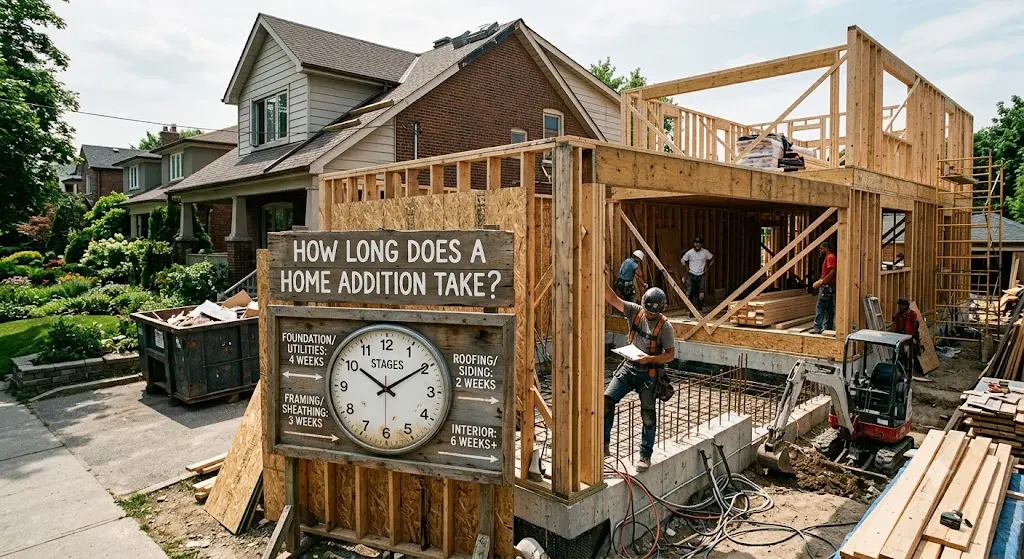
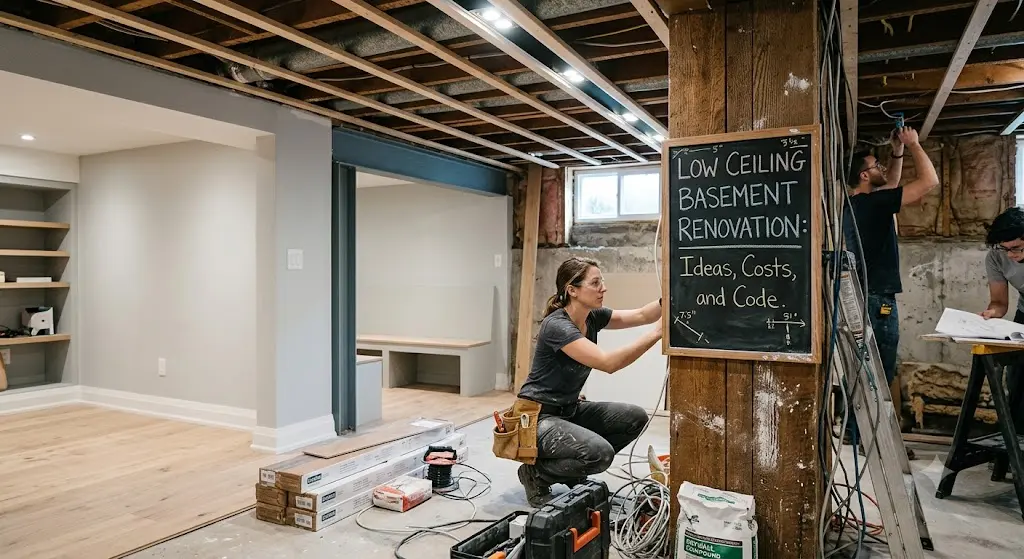
Home renovations take anywhere from a single weekend to over a year, with most projects in Toronto running 2 weeks to 12 months, depending on scope. Your permit requirements, material lead times, and site conditions determine the real timeline.
Most homeowners plan for construction but forget the phases before it. Design, permits, and contractor scheduling quietly add months before a single wall opens. Older homes, especially, carry hidden conditions that reshape timelines once demolition begins.
Understanding every phase from day one is what separates a smooth project from a stressful one. Read on to get a complete breakdown of every renovation timeline, phase by phase and room by room.
How Long Do Home Remodels and Renovations Take?
Home renovations take anywhere from a single weekend to over a year. Scope of work, permits, material lead times, and hidden conditions inside older homes all determine your actual timeline.
Cosmetic Renovations – A Weekend to Three Months
If you are updating paint, replacing flooring, or swapping fixtures, your project wraps up within a weekend to 3 weeks. Larger multi-room cosmetic updates across your Toronto home run 4 to 12 weeks. Since these projects don’t touch plumbing, electrical, or structure, permits aren’t required, keeping your schedule lean and your home livable throughout.
Medium Renovations – Several Weeks to Six Months
This is where most GTA homeowners get surprised. Your bathroom renovation takes 2 to 8 weeks, depending on how much plumbing moves. Your kitchen renovation runs 6 to 18 weeks in the GTA, with cabinets alone taking 8 to 12 weeks to arrive under current material lead times. The Ontario Building Code requires permits for plumbing or electrical work, adding 2 to 4 weeks before a single wall opens.
Major Overhaul – Six Months to Over One Year
If you are planning a whole-home renovation, plan on 9 to 12 months from design to final walkthrough. Nearly 60% of GTA homes predate 1981, and hidden wiring, asbestos, and deteriorated framing can add 4 to 8 unplanned weeks once demolition begins.
Note:
Working with an experienced team on your whole-home renovation prevents these surprises from derailing your schedule.
How Long Do Home Remodels and Renovations Take? A Room-by-room Breakdown for Toronto Homeowners
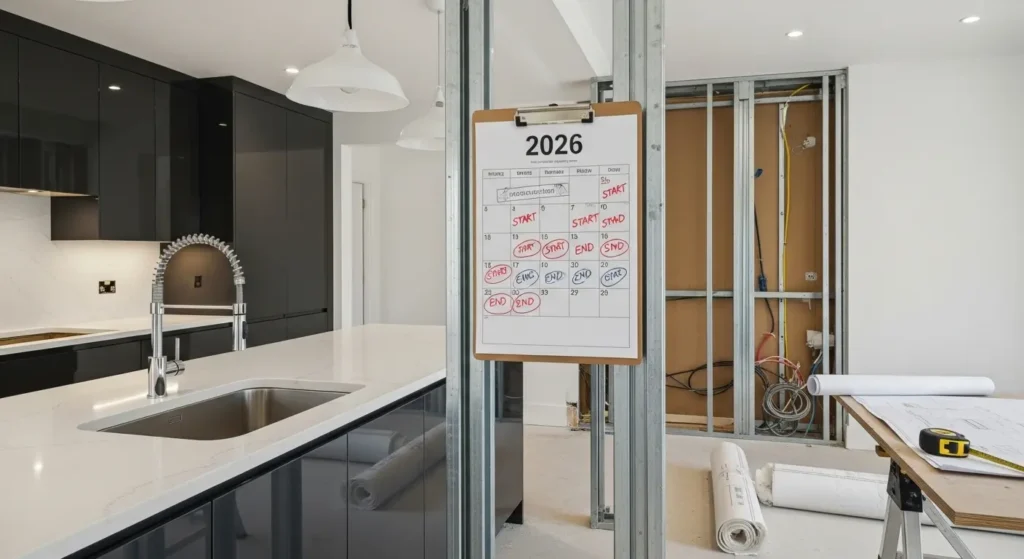
Home renovation timelines in Toronto vary by room type.
| Project Type | Timeline |
| Painting and Decorating | 1 to 2 weeks |
| Flooring Installation | 1 to 3 weeks |
| Bathroom Renovation | 2 to 8 weeks |
| Kitchen Renovation | 6 to 18 weeks |
| Basement Renovation | 4 to 16 weeks |
| Condo Renovation | 8 to 12 weeks |
| Home Addition | 4 to 9 months |
| Whole-Home Renovation | 6 to 12 months |
| Custom Home Build | 12 to 18+ months |
Read More: 20 Must-know Small Bathroom Renovation Ideas for 2026
How Long Does Each Phase of a Home Renovation Take?
Your renovation does not begin when construction starts. It moves through four phases, and understanding the renovation phases timeline upfront is what separates a smooth project from a stressful one.
Architectural Design Phase – 1 to 3 Months
The architectural design phase is where your entire project takes shape on paper. Simple projects take 2 to 4 weeks. Full-home projects run 1 to 3 months depending on complexity. The faster you finalize your renovation scope of work with your designer, the sooner everything else moves.
Bidding Phase – 2 to 3 Weeks
The renovation bidding process takes 2 to 3 weeks to collect and compare quotes. In the GTA, top WSIB licensed contractors book 3 to 6 months in advance. If you start searching after your drawings are ready, your preferred contractor will likely already be committed elsewhere.
HOA Approvals and City Permitting – 1 Month
This is the phase most Toronto homeowners underplan for. The Toronto building permit process targets 10 business days for its first review, but a clean residential submission realistically takes 6 to 12 weeks in 2026. The HOA approval process adds further time for condo and townhouse projects
Architectural Design Phase – 1 to 3 Months
The architectural design phase is where your entire project takes shape on paper. Simple projects take 2 to 4 weeks. Full-home projects run 1 to 3 months, depending on complexity. The faster you finalize your renovation scope of work with your designer, the sooner everything else moves.
Bidding Phase – 2 to 3 Weeks
The renovation bidding process takes 2 to 3 weeks to collect and compare quotes. In the GTA, top WSIB licensed contractors book 3 to 6 months in advance. If you start searching after your drawings are ready, your preferred contractor will likely already be committed elsewhere.
HOA Approvals and City Permitting – 1 Month
This is the phase most Toronto homeowners underplan for. The Toronto building permit process targets 10 business days for its first review, but a clean residential submission realistically takes 6 to 12 weeks in 2026.
+The HOA approval process adds further time for condo and townhouse projects. Municipalities like Markham and Richmond Hill process standard permits in 1 to 2 weeks, making the permit approval timeline in Ontario vary significantly by city.
Construction Phase – 3 to 9 Months
The construction phase duration depends on your project scope. Demolition takes 1 to 3 weeks. Structural framing runs 1 week to 2 months. For homeowners adding living space below grade, a properly sequenced basement renovation completes its construction phase in 6 to 10 weeks, while full multi-floor projects run 6 to 9 months.
Read More: Top 20 Bathroom Renovation Trends to Watch for 2026
Major Factors That Impact the Renovation Timeline
Your renovation timeline is not just about what you are building. These six factors shape how long your project actually runs from start to finish.
Home Size
A 900 square foot condo renovation moves much faster than a 3,000 square foot detached home. Every additional room adds trade coordination, material quantities, and inspection stages to your renovation project schedule. The larger your home, the longer each home renovation stage takes to complete properly.
Scale of Renovations
A cosmetic update and a full gut renovation timeline are worlds apart. Replacing fixtures takes days. Gutting and rebuilding from scratch involves plumbing, electrical, custom cabinetry, and multiple inspections. A full kitchen renovation alone pushes your timeline from weeks to months.
Change Requests
Change orders are one of the leading renovation delays causes on any GTA project. Every design change made after construction begins adds material reordering time, trade rescheduling, and in some cases new permit submissions. Locking in all decisions before demolition starts protects your contractor scheduling timeline and your budget.
Weather
Ontario winters run from December to February with temperatures averaging minus 6 to minus 1 degrees Celsius. Exterior work including foundations, framing, and roofing slows significantly or stops entirely in these months. Planning your project start date around Ontario’s seasons directly affects how long your renovation runs.
Unforeseen Home Improvements
Toronto’s aging housing stock regularly surprises homeowners once walls open. Load-bearing wall removal, outdated knob-and-tube wiring, asbestos insulation, and deteriorated subfloors are common discoveries in pre-1981 GTA homes. Each discovery adds weeks to your active construction schedule.
Homeowners renovating an older home should carry a renovation contingency budget of 15 to 20% before work begins.
Permitting
An incomplete Toronto building permit application restarts the review clock entirely. Structural changes, plumbing relocations, and secondary suite additions all require permits before a single trade begins work.
Hiring a contractor who manages your permits in-house, like the team behind every home addition at RM Renovation, removes this delay from your critical path entirely.
Read More: Best Flooring for Kitchen for Every Home
Professional Tips to Speed Up Home Renovations
- Finalize every material, finish, and fixture selection before demolition begins.
- Submit your permit application during the design phase, not after.
- Order custom cabinets, countertops, and windows the moment your drawings are approved.
- Book your contractor 3 to 6 months before your target start date.
- Avoid change orders once construction starts as each one adds days to your schedule.
- Hire a contractor who manages permits, inspections, and trades under one roof.
- Run your design and permit phases simultaneously to cut weeks off your pre-construction timeline.
- Keep a renovation contingency budget of 15 to 20% ready for unforeseen site conditions.
To Conclude
How long does a home renovation take comes down to one thing: how well your project is planned before work begins. Lock in your designs early, order materials before demolition starts, and work with a contractor who manages permits in-house. Every week saved in planning saves two weeks on site.
At RM Renovation, we have completed over 2,700 projects across the GTA with transparent timelines from day one. Get your free consultation today.
Frequently Asked Questions
Can You Live at Home During a Renovation?
It depends on which room is under construction. Single room projects, like a bathroom or basement renovation, allow you to stay home throughout. A whole-home renovation or full kitchen gut typically requires you to make temporary living arrangements for 4 to 12 weeks minimum.
How Far in Advance Should You Book a Contractor in Toronto?
Top GTA contractors book 3 to 6 months ahead of their available start dates. For spring and summer projects, booking the previous winter gives you the best access to experienced trades. Waiting until your drawings are ready often means waiting months longer for your preferred team.
In What Order Should You Renovate a House?
Always start with structural and mechanical work before any finishes go in. Electrical, plumbing, and HVAC rough-ins come first, followed by insulation, drywall, and flooring. Painting and decorating always come last, protecting your finished surfaces from trade damage throughout construction