Choosing the best flooring for kitchen can feel overwhelming, but focusing on durability, water resistance, and style simplifies the process. For example, porcelain tile, luxury vinyl, and engineered hardwood consistently perform well in busy kitchens.
At the same time, different flooring types offer unique benefits. Waterproof laminate and vinyl make cleaning easier, while natural stone, cork, or hardwood add warmth and texture. These options help balance functionality with visual appeal, creating a space that feels inviting.
Cost, installation, and daily household activities also influence your decision. By evaluating these factors carefully, you can ensure long-lasting performance and style. Read our guide to learn more and make the right choice for your kitchen.
Top Kitchen Flooring Options for Durability, Style, and Comfort
Choosing the best flooring for kitchen combines durability, style, and ease of maintenance. The following options highlight versatile materials that withstand daily use while enhancing the kitchen’s overall look and functionality.
1. Porcelain tile
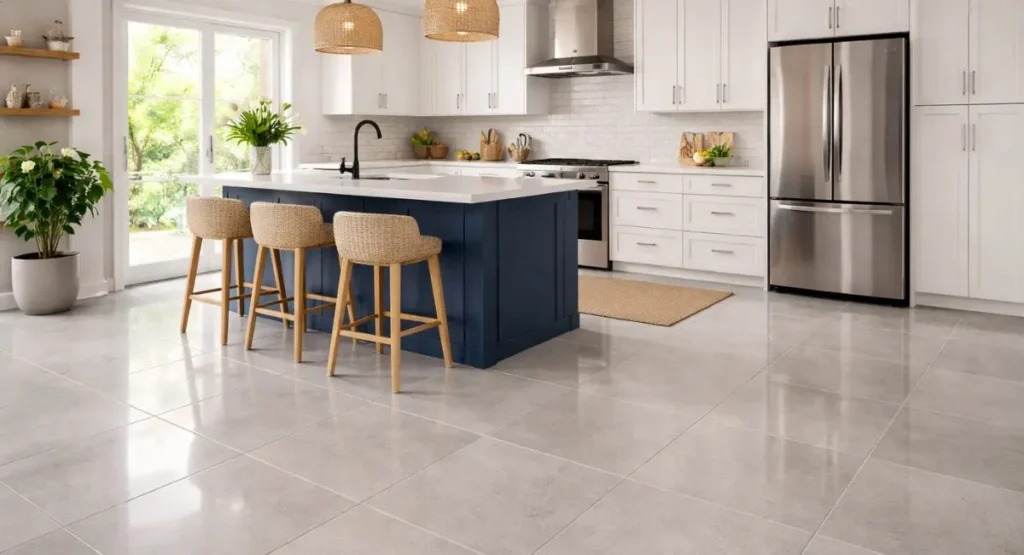
Porcelain tile remains a top choice among kitchen flooring options for busy homes. It handles spills, humidity, and daily traffic with ease. Therefore, many homeowners consider it durable kitchen flooring.
The dense surface blocks moisture and stains effectively. As a result, it suits families who cook often. Cleaning stays simple after messy meals. However, porcelain can feel cold during winter mornings. Many owners add rugs or heating systems. With proper installation, porcelain tile kitchen floor designs last for decades.
2. Luxury Vinyl Flooring (LVP / LVT / SPC)
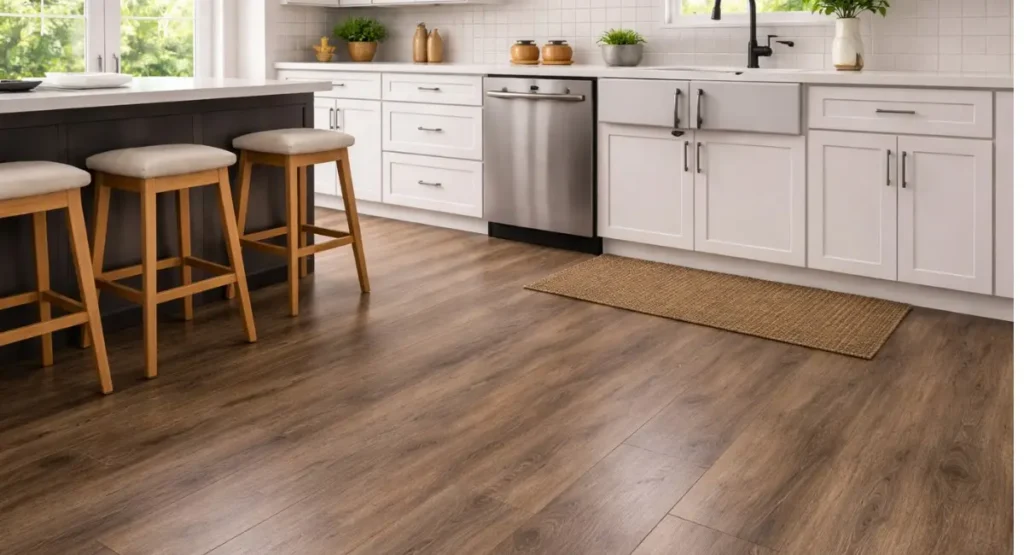
Many homeowners want kitchen floors that survive spills and daily wear. Luxury vinyl kitchen flooring solves that problem well. Its waterproof core prevents swelling near sinks or dishwashers.
As a result, families often consider it the best flooring for busy kitchens. The surface resists scratches from pets and chairs. Moreover, vinyl feels warmer and quieter than tile. Cleaning stays simple after cooking messes. Because of these benefits, many consider it reliable waterproof kitchen flooring today.
Read More: 20 Must-know Small Bathroom Renovation Ideas for 2026
3. Ceramic tile
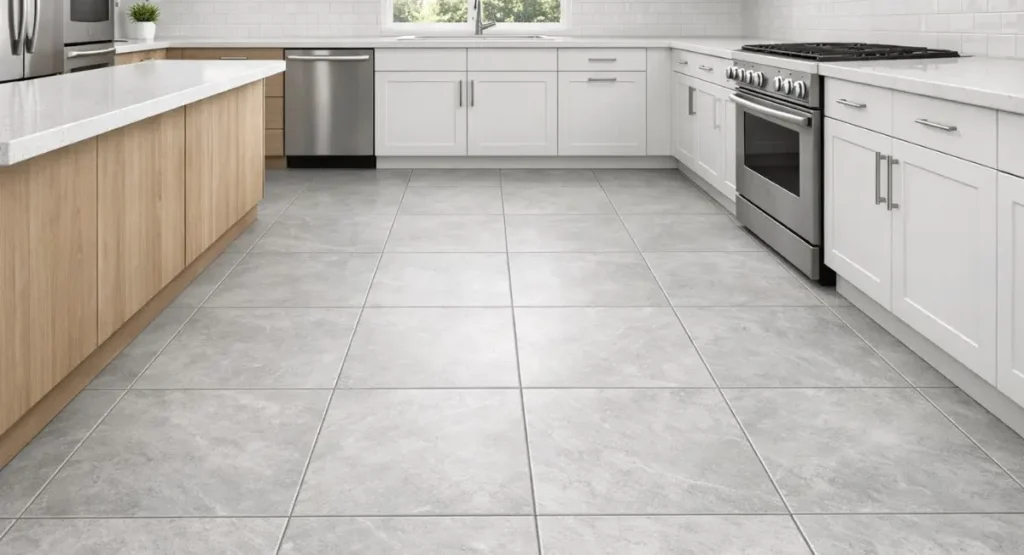
Many kitchens demand floors that tolerate spills, stains, and constant movement. A kitchen tile flooring options discussion often highlights ceramic tile. It offers strong moisture resistance and reliable durability. Therefore, many homeowners see it as easy to clean kitchen flooring. Grease and food wipe away quickly after cooking.
However, grout lines need regular sealing and cleaning. Ceramic can also feel cool during colder seasons. Still, well-installed kitchen flooring materials like ceramic tile perform reliably for years.
4. Engineered hardwood
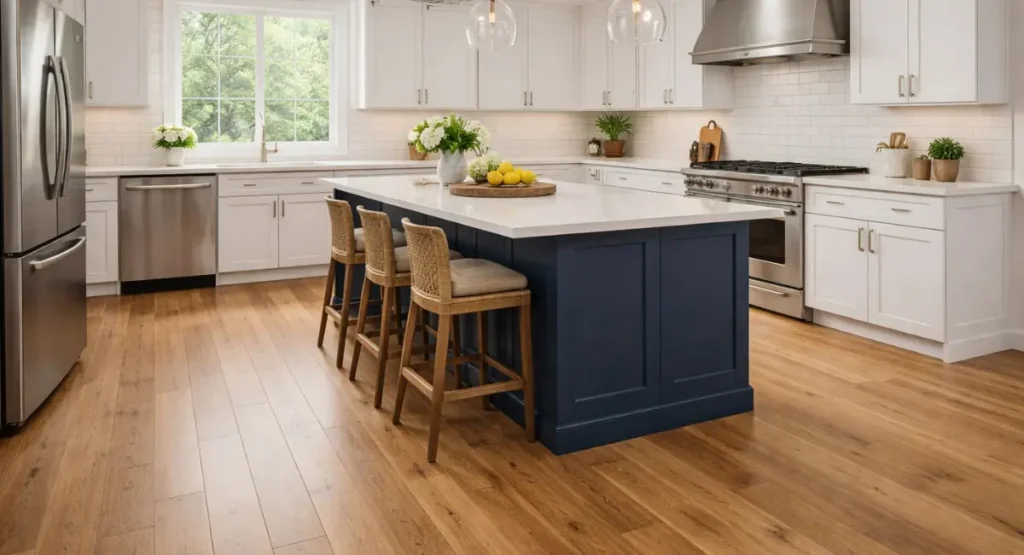
Many homeowners want real wood without moisture worries in busy kitchens. Engineered hardwood offers that balance. Its layered construction improves stability during seasonal temperature swings.
Therefore, planks expand less than traditional hardwood. You still enjoy authentic grain and warm texture underfoot. However, quick spill cleanup remains important for durability. Our team has handled many kitchen renovation Toronto projects using engineered wood. Homeowners choose it for modern kitchen flooring with warmth and lasting style.
Read More: What is The Kitchen Renovation Cost? Expert Guide for 2026
5. Waterproof laminate
Busy kitchens often need floors that manage spills and heavy daily traffic. Waterproof laminate addresses that challenge well. It’s sealed core blocks moisture from reaching the subfloor. Therefore, many homeowners consider it reliable waterproof kitchen flooring.
The protective wear layer also resists scratches from chairs and appliances. In addition, textured surfaces support safer non-slip kitchen flooring. Because of its price range, many families view it among practical budget kitchen flooring options. It also appears often in kitchen renovation GTA projects.
6. Natural stone
Natural stone delivers premium texture and long-term durability in demanding kitchens. Many homeowners consider it among the best flooring for kitchen upgrades. Granite, slate, and travertine resist heavy foot traffic well.
However, stone requires sealing to protect against stains. Proper sealing also improves easy to clean kitchen flooring performance. In addition, textured finishes support safer non-slip kitchen flooring conditions. Because of its upscale appeal, designers often include it in kitchen flooring ideas focused on timeless luxury.
7. Sheet vinyl
Sheet vinyl offers practical performance for kitchens that face frequent spills. The continuous surface reduces seams where moisture usually enters. Therefore, homeowners gain dependable waterproof kitchen flooring protection. The cushioned backing also feels softer underfoot during long cooking sessions.
Many families choose it within affordable kitchen flooring option for renovations. In addition, modern patterns mimic wood and stone textures convincingly. Because of its price and durability, it remains one of the best floorings for busy kitchens.
8. Cork flooring
Cork flooring offers comfort and natural insulation in active kitchens. Its cellular structure creates a softer walking surface than tile. Therefore, many homeowners appreciate it during long cooking routines.
Cork also provides a natural grip, supporting safer non-slip kitchen flooring conditions. In addition, sealed cork surfaces support easy-to-clean kitchen flooring maintenance. Many designers highlight cork among sustainable kitchen flooring materials. Because of its warmth and texture, it often appears in eco-focused kitchen flooring ideas.
Read More: Top 20 Bathroom Renovation Trends to Watch for 2026
9. Concrete flooring
Concrete flooring creates a strong base for modern kitchens with heavy activity. Many homeowners explore it within modern kitchen flooring upgrades. Sealed concrete resists moisture and daily spills effectively.
Therefore, it works well as durable waterproof kitchen flooring. The surface also tolerates constant movement from busy households. Because of this durability, many consider it among the best flooring for busy kitchens. In larger remodels, designers often include it during kitchen remodel Toronto projects seeking an industrial style.
10. Rubber flooring
Rubber flooring provides excellent grip and comfort in high-traffic kitchens. Many families prefer it when safety becomes a priority.
The surface naturally supports non-slip kitchen flooring performance. In addition, rubber absorbs impact from dropped cookware and utensils. This feature helps protect floors during daily cooking routines. Because of its durability, many view it among practical kitchen flooring options. It also suits busy homes where comfort matters during long meal preparation.
11. Terrazzo flooring
Terrazzo flooring delivers exceptional durability and visual character in modern kitchens. Stone chips combine with cement to create a dense surface. Therefore, it performs reliably as a long-lasting kitchen flooring material.
The polished finish also supports easy-to-clean kitchen flooring maintenance. In addition, terrazzo handles heavy foot traffic without visible wear. Designers often recommend it for upscale kitchen flooring ideas. Many luxury renovations include terrazzo in home renovation Toronto projects.
12. linoleum / marmoleum
Linoleum and marmoleum offer durable, eco-friendly flooring for active kitchens. These materials come from natural components like linseed oil and cork powder. Therefore, homeowners consider them sustainable kitchen flooring materials.
The sealed surface also supports easy-to-clean kitchen flooring maintenance. In addition, modern colors expand creative kitchen flooring ideas. Many homeowners exploring sustainable kitchen flooring Toronto renovations consider these materials carefully.
13. Heated tile flooring
Heated tile flooring improves comfort in kitchens during colder seasons. Radiant systems warm tiles from below using electric or hydronic heating. Therefore, homeowners enjoy warmer surfaces during early mornings. Many renovations pair this system with porcelain tile kitchen floor installations.
Tile also supports quick kitchen flooring maintenance after cooking. Because of its comfort and performance, contractors often recommend it during kitchen flooring installation in Toronto projects.
Read More: Bathroom Renovation Cost Explained: Factors & Smart Budgeting
Key Factors to Consider When Choosing Kitchen Flooring
When selecting kitchen flooring, you need materials that can withstand heavy use, spills, and seasonal changes. Therefore, it is important to balance durability, comfort, and maintenance for practical and long-lasting results.
1. Durability
You should choose flooring that resists scratches, dents, and dropped items. Materials like porcelain, ceramic, and engineered hardwood maintain their structure even under constant activity. Additionally, reinforced layers can increase lifespan and reduce visible wear.
2. Moisture Resistance
Since kitchens often experience spills, steam, and humidity, selecting water-resistant or waterproof surfaces is crucial. Vinyl, waterproof laminate, or properly sealed stone can prevent warping, swelling, and mold, keeping your floor reliable in any season.
3. Comfort Underfoot
Standing for long periods during cooking or meal prep can strain your feet and joints. Floors like cork, rubber, or cushioned laminate absorb impact while remaining firm, which helps reduce fatigue.
4. Maintenance & Cleaning
You’ll benefit from flooring that is easy to clean and maintain. Smooth, sealed surfaces allow quick spill removal, while protective coatings help prevent stains and preserve appearance over time.
5. Style & Aesthetics
Flooring affects the overall look and feel of your kitchen. Wood textures, stone finishes, or patterned tiles can create warmth and elegance. Choosing colors and finishes that complement your cabinets and countertops ensures cohesion.
6. Budget & Installation
It’s important to consider both material cost and installation requirements. While vinyl and laminate are budget-friendly, hardwood and natural stone offer superior durability and visual appeal. Planning installation and underlayment ensures long-term performance.
What Is the Average Cost of Kitchen Flooring by Material
Kitchen flooring costs vary depending on material, quality, and installation. On average, homeowners spend between $5 and $25 per square foot, including labor, in the Toronto and GTA area.
| Flooring Material | Average Cost per sq.ft |
| Porcelain Tile | $12 – $25 |
| Ceramic Tile | $8 – $20 |
| Engineered Hardwood | $10 – $22 |
| Luxury Vinyl (LVP/LVT/SPC) | $7 – $18 |
| Waterproof Laminate | $6 – $15 |
| Natural Stone | $15 – $30 |
| Sheet Vinyl | $5 – $12 |
| Cork Flooring | $8 – $16 |
| Concrete Flooring | $10 – $20 |
| Rubber Flooring | $8 – $18 |
| Terrazzo Flooring | $18 – $30 |
| Linoleum / Marmoleum | $7 – $15 |
| Heated Tile Flooring | $20 – $35 |
Read More:Top Basement Renovation Trends for 2026: Guide to Luxury and Function
Professional Installation vs DIY: Which Is Better for Kitchen Flooring?
For most kitchens, hiring experienced kitchen flooring contractors in Toronto or the GTA ensures the best outcome, while DIY can create hidden challenges.
Luxury vinyl kitchen flooring and other popular options may seem simple to install, but uneven subfloors, precise cuts, and proper moisture protection often require professional skills. Mistakes can reduce durability, create gaps, or increase long-term costs. Budget kitchen flooring options may appear easier for DIY, yet errors can outweigh initial savings.
Professional installers in Toronto and GTA like that you will find at RM Renovation handle all technical details, from leveling to seamless joins, ensuring a polished, long-lasting finish. Choosing experts for flooring installation guarantees efficiency, minimizes stress, and enhances both style and performance for your kitchen renovation projects.
In Closing
Selecting the right kitchen flooring requires balancing durability, style, maintenance, and budget. Consider your household’s daily activity, moisture levels, and long-term needs when making a choice. Consulting professionals ensures proper installation, maximizes lifespan, and enhances safety. For expert guidance and flawless flooring installation in Toronto and the GTA, contact RM Renovation today. Let our team help you create a kitchen that is both functional and beautiful.
1. How long does kitchen flooring usually last?
Lifespan depends on material, installation quality, and daily use. Porcelain and ceramic can exceed 20 years, while luxury vinyl or laminate typically last 10–15 years with proper care and maintenance.
2. Can I install kitchen flooring over existing floors?
Certain materials, like vinyl or laminate, can be installed over level existing floors. Tiles, stone, or engineered hardwood usually require a prepared subfloor to ensure stability and prevent future damage.
3. Which flooring is best for a high-traffic family kitchen?
Durable, water-resistant options like luxury vinyl, porcelain, or waterproof laminate manage spills, heavy foot traffic, and daily wear effectively, keeping your kitchen safe, functional, and stylish.
4. Are heated tile floors worth the investment?
Heated tiles enhance comfort, especially in colder climates, and can increase property value. Professional installation ensures even heating, proper insulation, and long-term efficiency.