Tired of a cold, cluttered, or outdated bathroom? 2026’s top bathroom renovation trends fix all of that. From heated floors to hidden storage, these updates make your space feel stylish and effortless to use.
Homeowners are choosing layered lighting, seamless surfaces, and water-saving fixtures. Built-in niches keep essentials within reach, while materials like microcement and large-format tiles make the bathroom feel luxurious without extra upkeep.
Whether it’s a master bath or a shared space, these trends help your bathroom work better and look stunning. They improve comfort, cut down on clutter, and add real value to your home.
Top 20 Bathroom Renovation Trends to Watch for 2026
1. Barrier-Free Wet Rooms
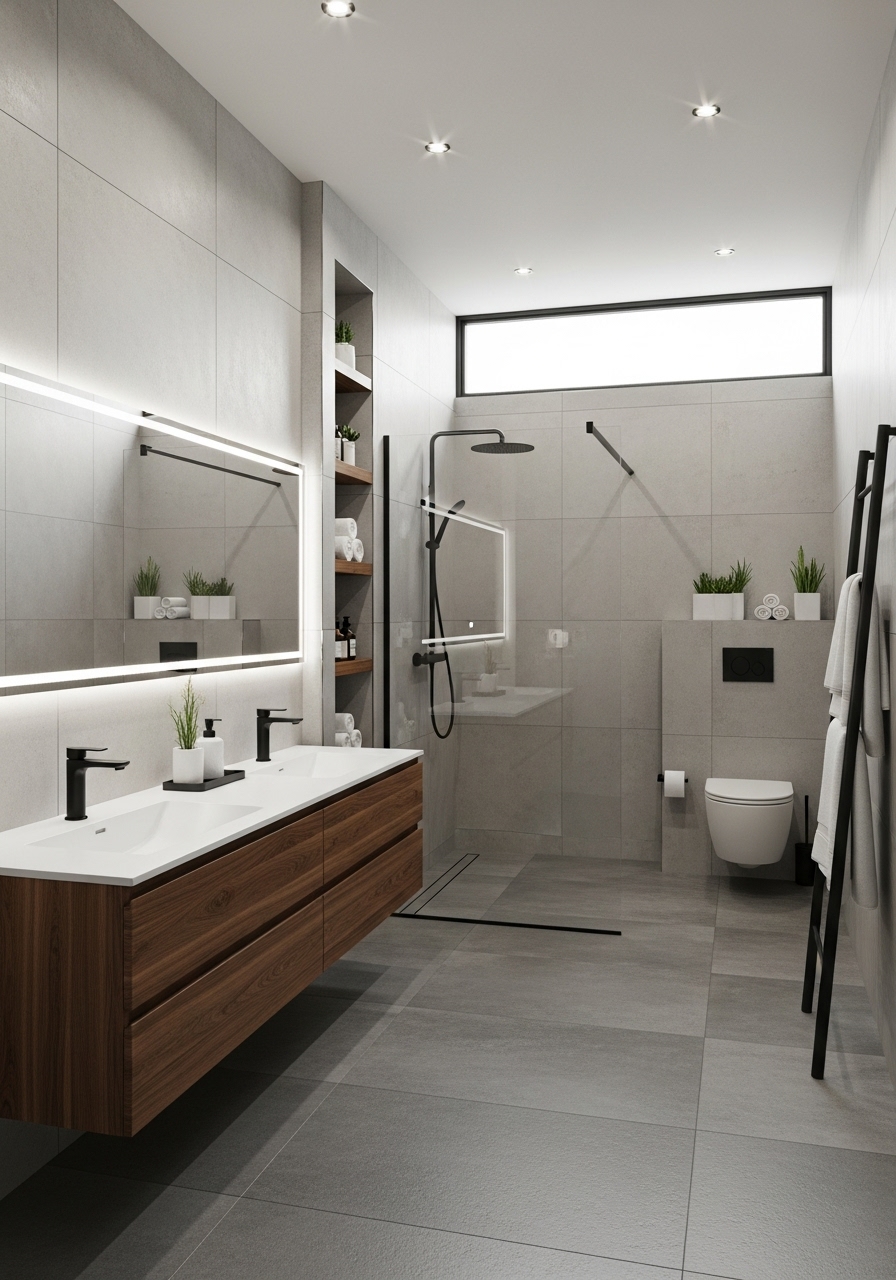
If you’ve ever dealt with water spilling outside the shower or worried about slipping, the layout is usually the problem. Barrier-free wet rooms eliminate raised curbs and use a recessed subfloor with a carefully calculated slope toward a linear drain. Waterproof membranes extend wall-to-wall, not just inside the shower.
That’s why Curbless walk-in showers improve safety, cleaning, and mobility. In Bathroom renovation Toronto 2026, this approach also increases long-term usability when executed through a professional bathroom renovation in Toronto.
2. Wellness-Focused Bathroom Design
Your bathroom often becomes the first place you start the day and the last place you unwind. When that space feels cold or purely functional, stress lingers. Wellness-focused bathroom design changes that. It combines layered lighting, controlled water temperature, and calming layouts to support daily recovery.
Features like steam-ready showers, warm surfaces, and quiet ventilation help create a true Home spa retreat. In Bathroom renovation Toronto 2026, this trend turns routine use into restoration when planned through a professional bathroom renovation in Toronto.
3. Smart Showers & Digital Controls
You usually realize the problem when the temperature spikes without warning. Smart showers are built to stop that. Digital control valves constantly balance hot and cold lines, so pressure stays stable even if someone turns on another tap.
With Thermostatic shower systems, you set the exact temperature once and the system holds it. That consistency improves safety and comfort, especially when controls are integrated during a smart home renovation instead of added later.
4. Nature-Driven Color Palettes (Earth, Clay, Green)
You feel the difference the moment harsh whites disappear. Nature-driven palettes replace them with clay tones, soft greens, and warm earth shades that rest your eyes. These colors reduce visual fatigue and make the room feel grounded instead of clinical.
When paired with natural light and texture, Biophilic bathroom design (natural elements) helps you relax without trying. This effect works best when finishes and tones are coordinated early through thoughtful painting and decorating services in Toronto rather than chosen at the end.
5. Low-Maintenance Surface Design
Homeowners often realize the problem when grout lines discolor or constant scrubbing becomes routine. Low-maintenance surface design removes those trouble spots. Large, continuous surfaces reduce joints, limit moisture absorption, and simplify cleaning. With Microcement walls and floors, finishes stay seamless, durable, and resistant to everyday wear.
The bathroom looks refined without feeling cold. This approach works best when materials and installation methods are coordinated early, as professional flooring and tiling services can align surface design, waterproofing, and finish quality from day one.
6. Silver & Chrome Finish Revival
You may remember chrome as something harsh or overly shiny. That hesitation makes sense. What’s different now is control. Today’s silver and chrome finishes are toned down and used with intent.
They reflect light softly, which helps your bathroom feel brighter without glare. You’ll also notice fewer water spots and fingerprints compared to darker metals. When combined carefully, Mixed metal finishes (Brushed Gold + Matte Black) let chrome add clarity without dominating the room.
7. Grout-Reduction Design Strategy
You don’t usually think about grout until it starts working against you. Stains settle in. Scrubbing becomes routine. Over time, the bathroom feels harder to keep clean. Grout-reduction design removes that frustration at the source.
Fewer joints mean fewer places for moisture and buildup to hide. With Large-format tiles (minimal grout lines), surfaces feel calmer and stay cleaner longer. Maintenance drops, not because you clean more, but because the design asks less from you.
8. Soft Geometry (Curves over Sharp Edges)
Sharp corners tend to make bathrooms feel rigid and unforgiving. Soft geometry changes that experience. Curved vanities, rounded mirrors, and arched shower edges guide movement more naturally through the space.
You feel it when brushing past a counter or stepping out of the shower, nothing interrupts your flow. This approach also improves safety by reducing impact points. The bathroom feels calmer, more welcoming, and easier to live with every day.
9. Textured Surfaces (Fluted, Ribbed, Layered Depth)
Flat finishes can make even new bathrooms feel unfinished. Textured surfaces solve that without adding clutter. Fluted vanities, ribbed glass, and layered wall treatments interact with light throughout the day, creating depth through shadow rather than contrast.
With Fluted and ribbed textures (vanities/glass), the room gains character while staying restrained. Texture becomes part of the architecture, not an accessory that dates quickly.
10. Furniture-Style Vanities
Vanities are no longer treated as built-in boxes. Furniture-style designs introduce legs, drawer proportions, and finishes similar to fine cabinetry. This changes how the bathroom feels immediately. Storage becomes more intuitive, and the space feels furnished rather than assembled.
With Warm wood vanities (White Oak/Walnut), warmth replaces the cold look of traditional units. This design direction often overlaps with broader interior planning seen in living and bedroom renovations, where cohesion between rooms matters.
11. Layered Lighting Systems
Bad lighting doesn’t wait for a convenient moment. It shows up when you’re half-awake, squinting at the mirror, or fighting shadows during your morning routine. Layered lighting fixes that.
Ambient light sets the mood, task lighting helps you see clearly, and accent lighting adds depth without glare. When everything works together, your eyes relax and the room feels right. With Backlit mirrors & sconce lighting, you get clear visibility without turning the bathroom into a clinical space.
12. Built-In Niches & Architectural Storage
Clutter isn’t about owning too much. It’s about not having the right place for it. Built-in niches and recessed storage fix that problem at the wall itself. Shampoo, towels, and daily essentials stay within reach without crowding the room with shelves or cabinets.
With Hidden storage solutions, the bathroom feels calmer and easier to maintain. Everything has a place, surfaces stay clear, and the design feels intentional every single day.
13. Heated Floors as a Standard Feature
Cold floors hit you when you’re least ready for them. One step out of the shower and the comfort is gone. Heated flooring removes that moment entirely. Radiant systems warm the surface evenly, so there are no cold patches underfoot.
You feel the difference most in the morning, when the floor meets you instead of shocking you awake. With Radiant floor heating, comfort is built in, not added on. That’s why it works best when planned early in a coordinated design-build renovation, not retrofitted later.
14. Wall-Mounted Toilets & Floating Fixtures
Visual weight matters more than most people realize. Floor-mounted fixtures interrupt sightlines and make spaces feel tighter. Wall-mounted toilets and floating elements reverse that effect. Cleaning becomes simpler, and the room feels lighter.
With Floating vanities (Minimalist look), more floor remains visible, which improves flow and perceived size. This approach rewards careful planning because framing and drainage must be right from the start.
15. High-Efficiency Water-Saving Fixtures
Water waste often goes unnoticed until higher utility bills or sudden pressure issues bring it to attention. High-efficiency fixtures solve both without changing how the water feels. Modern low-flow systems manage output internally, so performance stays strong while usage drops.
With Water-saving fixtures (Low-flow), efficiency becomes part of your daily routine. That’s why they matter most when chosen during a whole-home renovation, where water demand is balanced across the entire house, not room by room.
16. Integrated LED Mirrors & Smart Grooming Lighting
Poor lighting usually shows up when shaving, applying makeup, or checking details. Integrated LED mirrors solve that problem directly. Even light distribution reduces shadows, while anti-fog heating keeps visibility clear after showers. Brightness adjusts based on time of day, not guesswork.
With Smart mirrors with integrated LED/Anti-fog, grooming becomes easier and more accurate. These upgrades are most effective when lighting plans are aligned with finishes and wall layouts during bathroom renovation planning rather than added later.
Read More: How to Plan a Full Home Renovation
17. Sound-Reducing & Privacy-Enhanced Bathrooms
Are you struggling with bathroom noise? Thin walls, echoing surfaces, and exposed pipes can steal your privacy faster than you expect. Sound-reducing bathrooms fix this with insulation, sealed cavities, and smarter fixture placement.
The space suddenly feels separate from the rest of the home, and privacy improves without adding bulk. This is especially important in shared layouts and is often planned during condominium renovation, where controlling sound transfer matters most.
18. Easy-Clean & Hygiene-First Materials
Scrubbing stubborn grout lines is a chore you likely dread during your weekly deep clean. Grout-free wall panels eliminate those porous crevices where mold and bacteria thrive, making your surfaces practically self-cleaning.
By choosing non-porous options like microcement walls and floors, you ensure moisture cannot penetrate the substrate. These advancements protect your health and significantly reduce the time spent on maintenance. Investing in these materials is a cornerstone of a bathroom renovation that prioritizes long-term hygiene and a pristine, modern look.
19. Resale-Safe Modernization
You want your home to stand out in the Toronto market without alienating potential buyers with overly niche designs. Modern bathroom remodel ideas focus on high-impact updates like floating vanities (Minimalist look) and neutral, organic palettes that appeal to everyone.
These features create a sense of airy sophistication, making even smaller spaces feel significantly larger and more inviting. Consequently, focusing on clean lines and quality finishes ensures a high return on investment (ROI) for bathroom remodel. Such thoughtful upgrades help your property maintain its value and allure for years.
20. Future-Proof Design
Planning for the future often feels like a trade-off between safety and style, but it shouldn’t be. Curbless walk-in showers (Universal design) offer a sophisticated, high-end look while removing trip hazards for guests and family members of all ages.
By integrating stylish grab bars and large-format tiles (minimal grout lines), you create a space that is safe yet looks like a luxury spa. Transitioning to a barrier-free layout ensures your home is ready for any life stage. This approach is essential for a whole home renovation that values both aesthetics and lifelong functionality.
Read More: Factors To Consider During A Bathroom Renovation in Ontario
The Advantage of Professional Renovation in Meeting Modern Bathroom Standards
Toronto homes often combine limited space, aging infrastructure, and evolving regulations. Meeting modern bathroom standards requires more than design inspiration. It demands coordination that works within real structural conditions while delivering performance, safety, and durability.
1. Code-Aligned Structural Coordination
Modern bathrooms impact plumbing routes, electrical loads, ventilation paths, and waterproof assemblies. Working with Licensed renovation company Ontario ensures these systems align with code requirements, avoiding inspection delays and post-construction corrections.
2. Correct Installation Sequencing
Many bathroom failures stem from incorrect work order. Experienced Design-build renovation teams coordinate framing, waterproofing, heating, finishes, and fixtures in sequence, protecting materials and preventing hidden performance issues.
3. Advanced Moisture and Waterproofing Control
Toronto’s humidity cycles place constant stress on bathrooms. Professional execution applies continuous membranes, correct floor slopes, and sealed penetrations to prevent leaks, mold growth, and long-term structural damage.
4. Integrated System Planning from the Start
Features like heated floors, layered lighting, and concealed plumbing only perform properly when planned early. This level of integration is typically addressed during a comprehensive bathroom renovation in Toronto, not added afterward.
5. Long-Term Performance and Resale Confidence
Modern buyers evaluate bathrooms on durability and efficiency, not appearance alone. Professional renovation supports Return on investment (ROI) for bathroom remodel by ensuring systems remain serviceable and finishes age predictably.
To Conclude
Modern bathroom renovation trends are shaped by how people actually live. Today’s bathrooms prioritize comfort, easier maintenance, efficient systems, and layouts that age well over time. When these elements are planned together, the result is a space that feels calm, functional, and future-ready rather than quickly outdated.If you’re planning a bathroom upgrade, working with RM Renovation ensures these trends are applied correctly from planning to execution. Book a consultation today and turn modern bathroom ideas into lasting results.
1. How much does a modern bathroom renovation cost in Toronto?
Bathroom renovation cost Toronto depends on layout changes, material quality, and system upgrades. Projects aligned with current bathroom renovation trends often cost more upfront but reduce future maintenance and improve long-term performance.
2. Are modern bathroom renovations a good investment?
Yes. A properly planned upgrade delivers strong Return on investment (ROI) for bathroom remodel by improving functionality, efficiency, and buyer appeal. Homes updated using proven bathroom renovation trends tend to attract more interest in competitive markets.
3. Which materials are best for hygiene and durability?
Modern renovations favor sustainable bathroom materials that resist moisture, stains, and bacteria. Fewer joints and non-porous surfaces support cleaner environments and align with today’s hygiene-focused bathroom renovation trends.
4. What smart features are becoming standard in bathrooms?
Homeowners are increasingly adding Smart toilets with bidet features, Touchless motion-sensor faucets, and Smart leak detectors. These upgrades improve hygiene, conserve water, and prevent costly damage before it starts.