Home addition prices in Toronto range from $300 to $600+ per square foot, with most GTA projects budgeting between $120,000 and $400,000+, depending on scope and addition type.
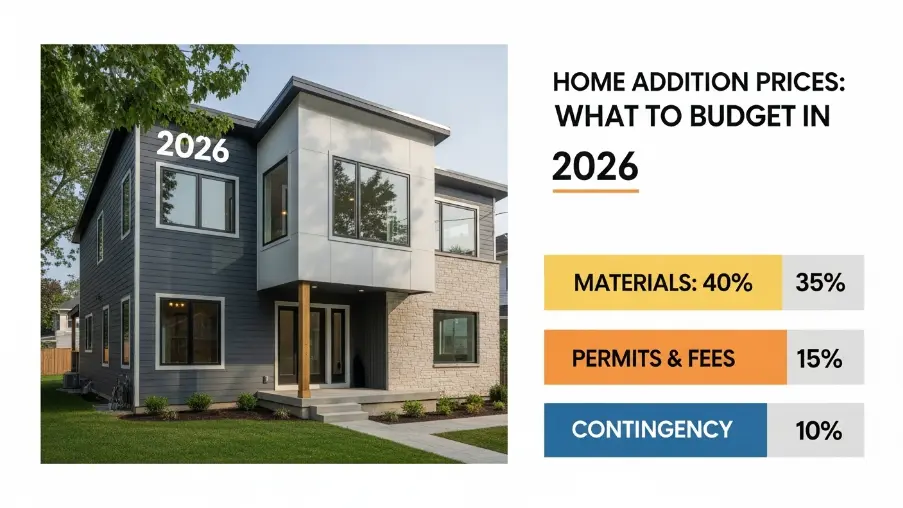
That range exists for real reasons. Housing costs here make moving one of the most expensive decisions a family makes. Most homeowners stay, expand, and invest in what they already own. Material prices, permit fees, trade availability, and your home’s existing condition all shape what you actually pay. Read on to get a full breakdown of every addition type, cost factor, and money-saving tip.
How Much Does a Home Extension Cost?
In Toronto and across the GTA, home addition prices in 2026 run between $300 and $600+ per square foot. Most homeowners budget between $120,000 and $400,000+, depending on the addition type and scope.
That wide range exists for real reasons. The age and condition of your home matter. Older homes in Scarborough, East York, and older parts of Etobicoke often need foundation upgrades, new wiring, or asbestos remediation before construction starts.
Your material choices, design complexity, and the GTA municipality you are in all move the number. A well-planned home addition in Toronto gives you the extra square footage your family needs, without the cost, stress, and upheaval of moving.
Home Addition Cost by Square Foot
Here is what the Ontario market looks like right now for home addition cost per square foot:
| Addition Type | Cost Per Sq Ft (CAD) |
| Basic ground-floor room extension | $220 – $380 |
| Mid-range rear or side addition | $350 – $500 |
| High-end or complex addition | $500 – $600+ |
| Second storey – unfinished shell | $312 – $390 |
| Second storey – turnkey finished | $360 – $450+ |
Toronto proper sits at the higher end of these ranges. Suburban GTA cities like Mississauga, Vaughan, Markham, and Burlington tend to land lower due to easier site access and more competitive trades.
Second Storey Addition
A second-storey addition is the most transformative home addition project – and the most complex. You are adding a full floor of living space without shrinking your yard by a single square foot.
In Toronto, expect to budget $300,000 to $550,000+ for a fully finished second floor. That cost covers structural engineering, full roof removal, load-bearing wall reinforcement, framing, HVAC redistribution, plumbing rerouting, electrical panel upgrades, and interior finishing.
Garage Addition
A detached garage addition in the GTA runs $80,000 to $150,000. Converting an existing attached garage into liveable square footage costs less – typically $40,000 to $100,000, depending on insulation, HVAC requirements, and finishing level.
Homeowners across North York, Etobicoke, and Hamilton Road corridors commonly use garage additions for dual purposes. Think of a proper workshop, secure storage, or a self-contained suite for an aging parent or adult child returning home. A permitted garage suite also adds legal rental income potential, which directly lifts your MPAC property assessment and resale value.
Single Room Addition
Need a main-floor bedroom, a dedicated home office, or a guest suite for an in-law? A single-room addition covering 200 to 400 square feet is the most accessible starting point for homeowners thinking about expanding. Budget $60,000 to $150,000, depending on size and finishes.
Add plumbing for a bathroom, and costs move toward the higher end. If you are planning an ensuite or a powder room as part of the addition, our Toronto bathroom renovation team handles that scope – we often run both simultaneously to keep construction disruption to a minimum.
Read More: Bathroom Renovation Checklist: Plan It Right From Day One
Sunroom Addition
A three-season sunroom starts at $25,000 to $40,000. A fully insulated, four-season sunroom with proper glazing, heating, and an Ontario Building Code-compliant foundation runs $45,000 to $70,000 in the GTA.
Families in Oakville, Burlington, and the outer GTA suburbs often choose sunroom additions to bring outdoor living inside during Ontario’s longer cold seasons. It is one of the most cost-effective ways to gain livable square footage without committing to a major structural build.
Basement Addition
A basement addition or underpinning project is the smartest lower-cost option for Toronto homeowners who need more square footage fast. You add finished living space at $50 to $150 per square foot – a fraction of what any above-grade home extension costs.
Finished basements in Toronto return 70-85% of investment at resale. A fully legal basement suite – with proper egress windows, fire separation, and an ESA electrical certificate – generates $1,500 to $2,500 per month in rental income in most GTA neighbourhoods.
Our basement renovation services in Toronto cover full underpinning, waterproofing, legal suite conversions, and permit coordination across the GTA.
Bump-Out Addition
A bump-out extends one room outward by two to fifteen feet without a full new foundation. It is the most budget-friendly way to expand a specific space – a cramped kitchen, a tight main-floor bathroom, or a dining room that has never quite been large enough for family dinners.
Expect $20,000 to $80,000, depending on size and structural requirements. For GTA families who need targeted extra space without a full addition project, a bump-out often solves the problem cleanly and affordably.
Read More: How Long Does a Home Renovation Take? 2026 Guide
Porch and Deck Enclosure
Enclosing an existing porch or deck turns dead seasonal square footage into a usable room year-round. Costs range from $15,000 to $60,000, depending on whether you want three-season or fully insulated four-season use.
The structural condition of the existing porch or deck affects price significantly – older structures in Hamilton, Ajax, or Whitby sometimes need full rebuilds before enclosure work can start.
Major Factors Affecting Home Addition Prices
Size and Extent of the Project
Larger additions cost more in total. Smaller additions sometimes cost more per square foot because fixed expenses – permit fees, engineering drawings, site mobilization – spread across fewer square metres. A 200 sq ft bump-out and a 600 sq ft rear extension both need the same permit process; one just spreads those fixed costs further.
Building Materials
Standard finishes keep house addition costs down. Builder-grade fixtures, laminate flooring, and vinyl siding are cost-effective choices for budget-focused projects. Custom cabinetry, premium stone countertops, oversized windows, and fibre cement cladding push costs up quickly. For resale-focused additions, mid-range materials consistently deliver the best return on investment in the GTA market.
Local Permits
Every home addition in Toronto and across Ontario requires a building permit from the City of Toronto Building Division. Current permit fees start at a base of $198.59 plus $17.16 per square metre of new construction area. If your project requires a zoning variance, a Committee of Adjustment application adds $2,000 to $5,000 or more to the overall budget.
Peel Region, York Region, Durham Region, and Halton Region all have their own municipal permit fee structures. We handle permit applications and City coordination across every municipality we serve. You focus on the result; we handle the paperwork.
Contractor Labour Costs
Labour is the single biggest cost driver in GTA home addition pricing right now. Experienced carpenters, electricians certified by the Electrical Safety Authority (ESA), and licensed plumbers are in high demand. Toronto proper commands the highest trade rates in Ontario.
Verify every contractor carries WSIB clearance and general liability insurance before signing anything. Get three scope-based quotes – not ballpark estimates – and compare them line by line.
Architect and Engineering Costs
Ontario requires stamped architectural drawings for all permitted home additions. Budget $3,000 to $10,000+ for architectural plans and structural engineering reports depending on complexity. Second-storey additions and any project involving load-bearing modifications require a licensed structural engineer’s stamp.
Read More: How Much Does a Basement Renovation Cost? 2026 Pricing Guide
How to Finance the Cost of Your Home Addition
- Home Equity Line of Credit (HELOC): The most widely used financing option for GTA homeowners. A HELOC draws against the equity you have already built in your home, typically at lower interest rates than personal or construction loans. Best suited for larger additions where you want to draw funds in staged payments as construction progresses.
- Mortgage refinance: Some homeowners roll home extension costs into a refinanced mortgage. This works well when current rates are competitive, and the addition adds meaningful resale value to the property.
- Construction loan: A construction loan releases funds in milestone-tied stages throughout the build. It gives you tighter cash flow control on larger second-storey or whole-home addition projects.
- Personal savings: The cleanest option for smaller bump-out additions, porch enclosures, or sunrooms under $50,000. No lender approvals, no interest, no delays.
You can speak with your bank or a mortgage broker before you finalize a scope. Your financing capacity should drive your design decisions – not the reverse.
How to Save on House Addition Costs
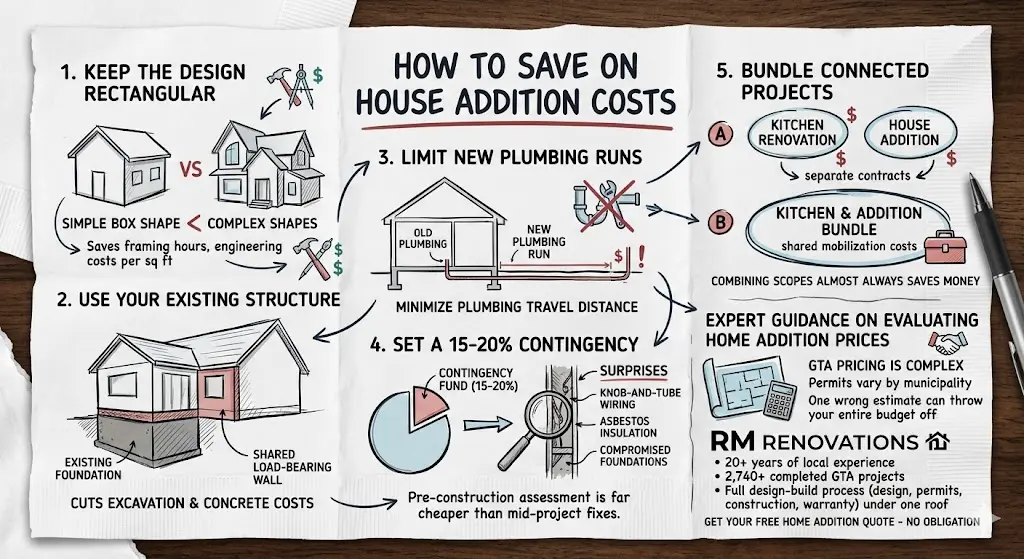
- Keep the design rectangular. A simple box shape costs less per square foot than complex rooflines, angled walls, or multi-level additions. Every structural complication adds framing hours and engineering cost.
- Use your existing structure. Extending over an existing foundation or tying into a shared load-bearing wall cuts excavation and concrete costs significantly.
- Limit new plumbing runs. Routing new plumbing lines through an existing GTA home is one of the more expensive parts of a home renovation. Position your addition to minimize how far new plumbing needs to travel.
- Set a 15-20% contingency. Older Toronto homes – especially pre-1980 builds in Scarborough, East York, and the older Etobicoke stock – regularly reveal surprises: knob-and-tube wiring, asbestos insulation, or compromised foundations. Catching these in pre-construction assessment is far cheaper than mid-project.
- Bundle connected projects. If you are opening up walls for an addition, do your kitchen renovation in Toronto at the same time. Or pair your addition with a whole-home renovation to share mobilization costs across one project. Combining scopes almost always saves money versus running them as separate contracts.
Take Expert Guidance on Evaluating Home Addition Prices
Home addition pricing in the GTA is complex. Permits vary by municipality, materials costs fluctuate, and older Toronto homes hide costly surprises. One wrong estimate can throw your entire budget off.
RM Renovations brings 20+ years of local experience, 2,740+ completed GTA projects, and a full design-build process – design, permits, construction, and warranty under one roof. Get Your Free Home Addition Quote – No Obligation
Frequently Asked Questions
How long does a home addition take in Toronto?
A single-room or bump-out addition typically takes 3 to 5 months from permit approval to completion. A full second-storey addition in the GTA runs 8 to 12 months, depending on structural complexity and City inspection scheduling.
Is it cheaper to add onto your home or buy a new one in the GTA?
In most GTA neighbourhoods, adding is significantly cheaper once you factor in land transfer tax, legal fees, moving costs, and a higher purchase price. A well-planned home extension often costs $200,000 to $400,000 less than upsizing through the Toronto resale market.
Will my property taxes go up after a home addition in Ontario?
Yes. MPAC reassesses your property value once a home addition is completed and registered. Additional liveable square footage increases your assessed value, which raises your annual municipal property tax – budget for a modest increase post-construction.